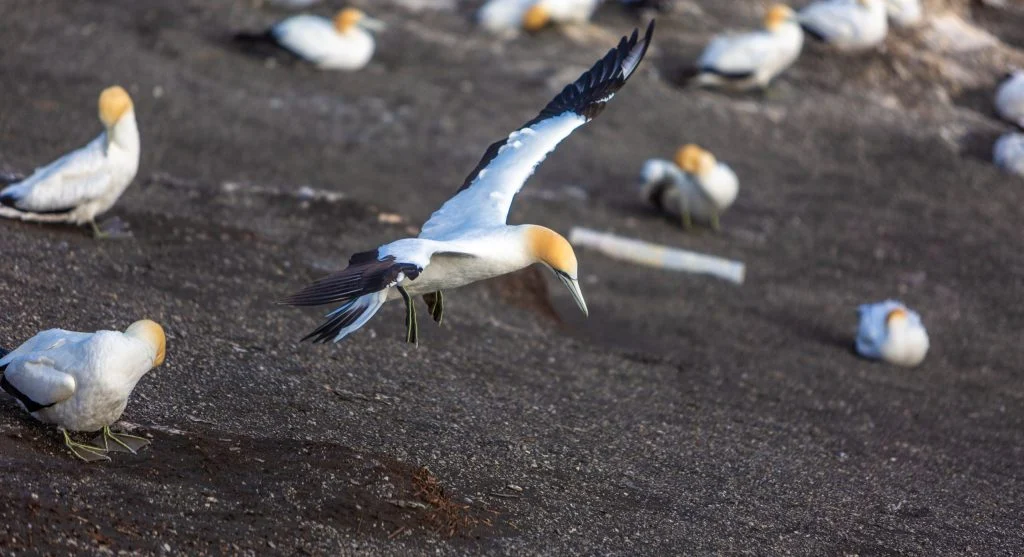
The world’s oceans are filled with countless hunting strategies, but few are as dramatic as the plunge-diving behavior of northern gannets. These large seabirds patrol coastal waters and open ocean, searching for schools of fish beneath the surface. When they spot a target, a gannet may suddenly fold its wings and drop toward the water like a living spear.
The sight is striking. Northern gannets can dive from heights of more than 100 feet, hitting the water at impressive speeds. To human observers, the impact may look dangerous, yet these birds perform the same dive again and again throughout their lives.
Researchers studying why northern gannets dive from great heights explain that this behavior helps them reach fish beneath the surface quickly and efficiently. Their bodies are built with a remarkable set of adaptations that make these powerful dives possible.
Life at Sea Requires Efficient Hunting
Finding food in the ocean is not easy.
Fish are always moving, schools shift location, and ocean conditions can change from one day to the next. Seabirds must search across wide areas of water to find prey.
Researchers explain that successful marine hunters often develop specialized techniques that make feeding more efficient.
For northern gannets, plunge-diving has become one of the most effective methods.
This strategy allows them to reach fish that many surface-feeding birds cannot access.
Exceptional Eyesight Helps Locate Prey
One major reason northern gannets dive so effectively is their excellent eyesight.
Researchers explain that these birds can spot fish from high above the ocean surface.
Sharp vision helps them identify schools of prey while they are still in the air.
Once a suitable target is located, the gannet begins preparing for its dive.
Accurate visual information is essential because the bird has only seconds to reach its prey.
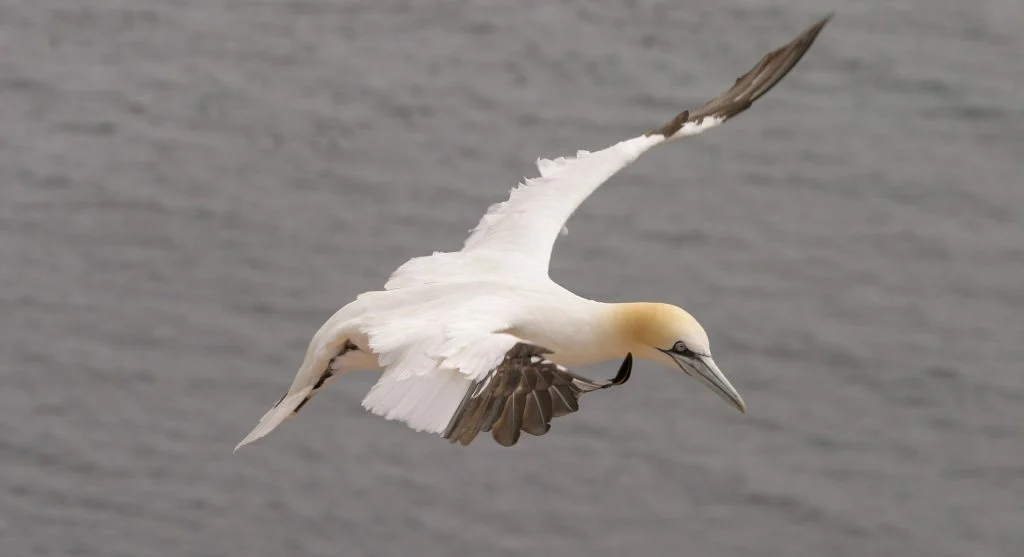
The Dive Begins With Wing Positioning
When prey is spotted, a gannet quickly changes its body position.
Researchers explain that the bird folds its wings tightly against its body before descending.
This streamlined shape reduces air resistance and helps increase speed.
The bird essentially turns itself into a living projectile.
Every movement helps make the dive more efficient.
Special Adaptations Protect Against Impact
Hitting the water at high speed would be dangerous for most birds.
Northern gannets have several adaptations that help reduce the risk of injury.
Researchers explain that air sacs beneath the skin help cushion the impact.
These structures work like natural shock absorbers.
Strong neck muscles and specialized body structures also help protect the bird during the dive.
Nostrils Remain Closed During Dives
Another remarkable adaptation involves breathing.
Scientists explain that adult northern gannets do not rely on open external nostrils in the same way many birds do.
During dives, the nostril openings remain closed, which helps reduce the chance of water entering the respiratory system.
This adaptation helps the birds stay in control during underwater movement.
Even small anatomical features can provide major survival advantages.
Speed Increases Hunting Success
The speed created during a plunge dive is one of the gannet’s greatest strengths.
Researchers explain that entering the water quickly allows gannets to reach fish before the prey can fully react.
Gravity and aerodynamic body positioning combine to create powerful momentum.
This allows the bird to break through the water surface efficiently.
Fast access to prey improves the chances of a successful catch.
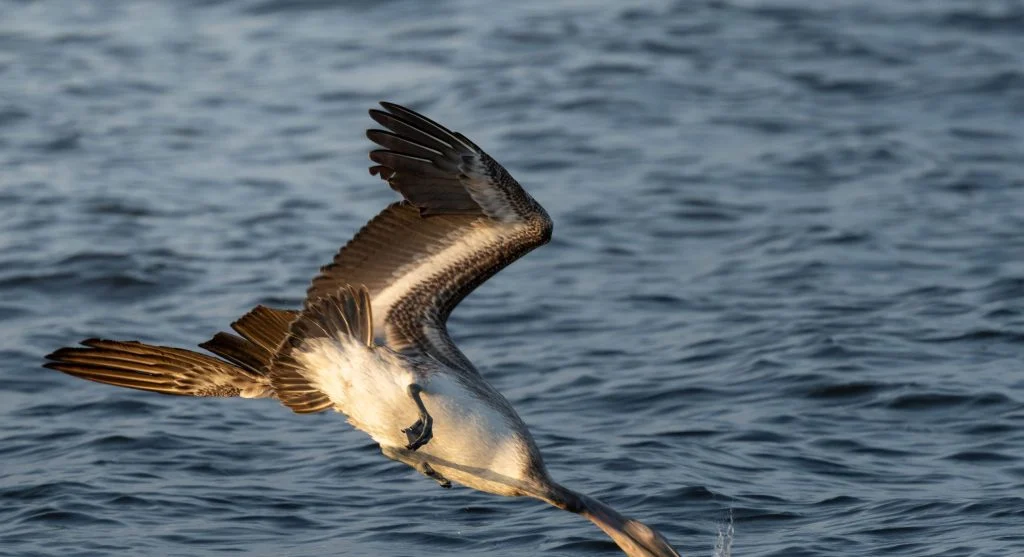
Hunting Continues Beneath the Surface
The dive does not always end when the bird hits the water.
Researchers explain that northern gannets may continue chasing prey underwater.
Powerful feet and wing-assisted movement help them maneuver below the surface.
This continued pursuit increases the chance of capturing fish.
The ability to hunt in both air and water makes gannets highly versatile predators.
Fish Are the Main Target
Northern gannets mainly feed on fish species that gather near the ocean surface.
Researchers explain that prey selection can vary depending on location and availability.
Schooling fish often create excellent feeding opportunities.
When large groups of fish gather, many gannets may dive in the same area.
This can create some of the most spectacular wildlife scenes along the coast.
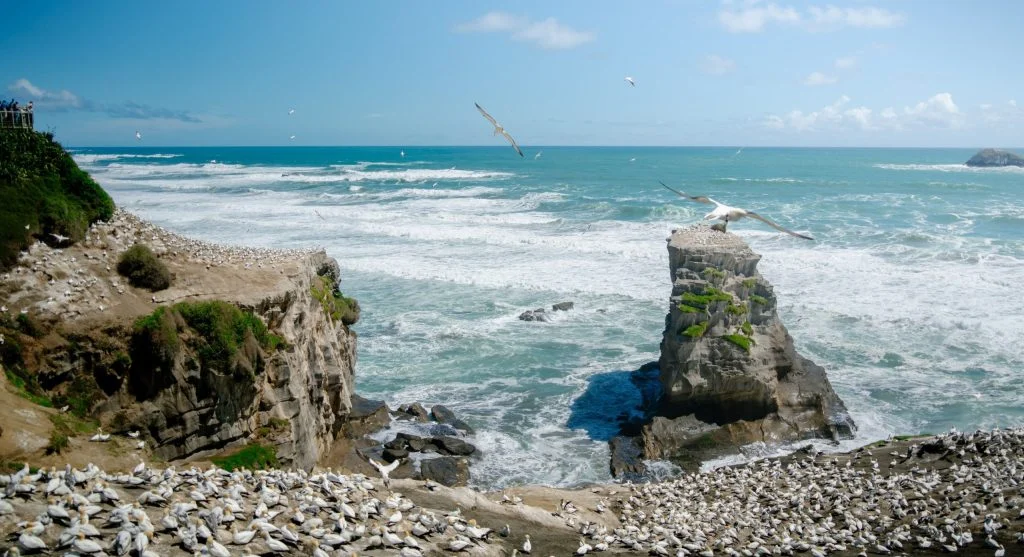
Colonies Can Contain Thousands of Birds
Northern gannets often breed in large colonies on coastal cliffs and islands.
Researchers explain that some colonies contain thousands of nesting birds.
These locations become extremely active during the breeding season.
Adult birds travel long distances in search of food.
Successful hunting helps them feed and support their growing chicks.
Ocean Conditions Influence Hunting Behavior
Environmental conditions play a major role in feeding success.
Weather patterns, water temperature, fish abundance, and ocean currents can all affect how and where gannets hunt.
Researchers continue studying how seabirds respond to changing marine conditions.
Understanding these relationships helps improve conservation planning.
Healthy oceans support both fish populations and seabird communities.
Conservation Depends on Healthy Marine Ecosystems
Northern gannets depend on productive marine habitats.
Researchers explain that maintaining healthy fish populations is important for their long-term survival.
Marine conservation efforts often benefit many species beyond seabirds.
Protecting ocean ecosystems helps maintain ecological balance.
Conservation science continues to improve understanding of these important connections.
Researchers Continue Studying Seabird Adaptations
The diving behavior of northern gannets remains an active area of scientific research.
Scientists use tracking devices, direct observations, and modern technology to study their movement patterns and feeding behavior.
Each new discovery reveals more about how these birds survive in demanding marine environments.
The more researchers learn, the more impressive the gannet’s adaptations appear.
These seabirds remain among the most specialized hunters in coastal ecosystems.
Frequently Asked Questions
Q: Why do northern gannets dive from such great heights?
A: Diving from height generates speed that helps them reach fish quickly.
Q: How fast can a gannet dive?
A: Researchers estimate that diving birds can reach very high speeds before entering the water.
Q: How do gannets avoid injury?
A: Specialized air sacs, strong muscles, and streamlined body structures help protect them.
Q: What do northern gannets eat?
A: Their diet consists mainly of fish.
Q: Do gannets hunt underwater?
A: Yes. They may continue pursuing prey after entering the water.
Key Takeaway
Northern gannets dive from incredible heights because this hunting strategy helps them reach fish quickly and efficiently. With sharp eyesight, streamlined bodies, protective adaptations, and underwater hunting abilities, these birds have become some of the most specialized predators in marine ecosystems. Their dramatic dives remain one of the most impressive wildlife spectacles along the world’s coastlines.