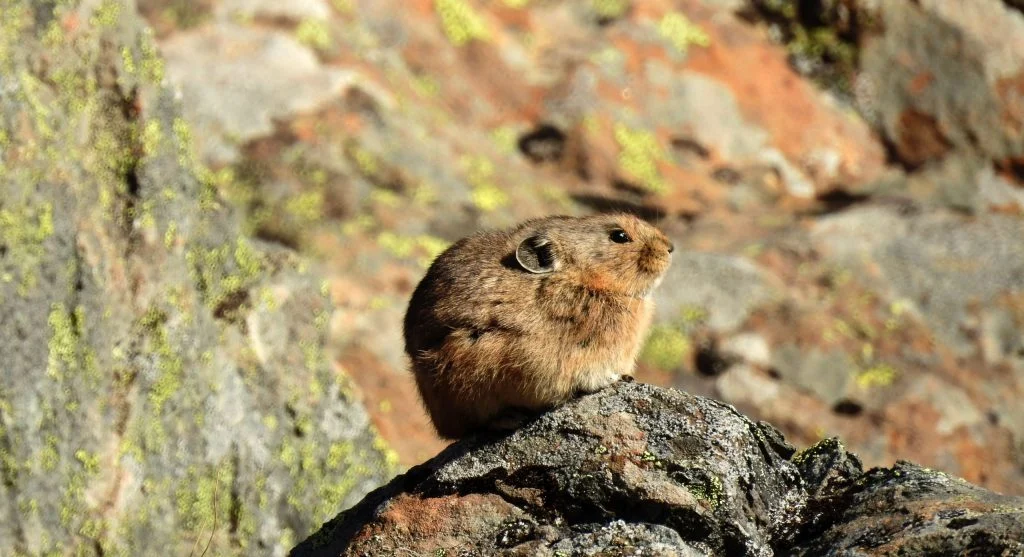
High above forests and valleys, where rocky slopes cover the landscape and temperatures stay cool even in summer, a small mammal spends much of the warm season preparing for what comes next. This animal is the pika, a relative of rabbits known for its round body, short limbs, and sharp calls that echo through mountain habitats.
Although pikas are small, their seasonal preparation is remarkable. During the warmer months, they collect grasses, flowers, leaves, and other vegetation, building large piles of dried plants known as haypiles. These stored food reserves help them survive long winters when fresh vegetation becomes difficult or impossible to find.
Researchers studying why pikas gather plants before winter explain that this behavior is one of the most impressive examples of preparation in the animal kingdom. Unlike some mammals that hibernate, pikas remain active through winter, which makes stored food essential for survival.
Life in the Mountains Is Challenging
Pikas often live in rocky alpine environments where weather can change quickly.
Researchers explain that these habitats have short growing seasons and long winters. Snow may cover the ground for months, making vegetation hard to reach.
Animals living in these regions need effective ways to cope with seasonal food shortages.
Pikas solve this challenge through careful planning and food storage.
Their survival depends on collecting enough food before winter arrives.
Haypiles Function Like Natural Pantries
One major reason pikas gather plants is to create reliable food supplies for winter.
Wildlife experts explain that haypiles work much like a pantry filled with stored food.
Throughout summer, pikas repeatedly carry vegetation to storage areas hidden among rocks.
As the plants dry, they become preserved and remain available for later use.
This stored food allows pikas to stay active even when snow covers much of the landscape.
Collecting Food Requires Constant Effort
Pikas spend an impressive amount of time gathering vegetation.
Researchers have observed individuals making many trips between feeding areas and storage sites.
Each trip may carry only a small amount of plant material.
Over time, however, those small efforts add up.
By the end of summer, a single pika may have collected a surprisingly large amount of food.
Plant Selection Matters
Pikas do not gather plants at random.
Scientists explain that they often choose specific plant species that offer good nutrition and store well.
Some plants may dry better than others.
Researchers continue studying how pikas select vegetation and whether their preferences change between habitats.
Careful food selection can improve their chances of surviving winter.
Drying Plants Helps Preserve Them
Fresh plants contain moisture, which can cause spoilage.
Researchers explain that pikas often spread vegetation in ways that allow it to dry naturally.
This drying process helps preserve the plants.
Once dried, the food remains usable for much longer periods.
The technique is similar to traditional hay production used by humans.
Winter Brings New Challenges
When winter arrives, temperatures fall and snow builds up across alpine habitats.
Fresh vegetation becomes scarce.
Researchers explain that stored haypiles provide a dependable source of food during these difficult months.
Without these reserves, surviving winter would be much harder.
The work pikas do in summer directly affects their survival later in the year.

Pikas Do Not Hibernate
Many small mammals get through winter by hibernating.
Pikas follow a different strategy.
Researchers explain that they remain active during the colder months.
Because they stay active, stored food becomes especially important.
Haypiles provide the resources they need to support winter activity.
Rocky Habitats Provide Shelter
Pikas often live among rock piles known as talus slopes.
These areas contain many crevices and spaces that protect them from predators and harsh weather.
Researchers explain that storage sites are often located within these sheltered rocky areas.
The rocky landscape provides both safety and suitable places for food preservation.
Habitat structure plays an important role in pika survival.
Predators Influence Daily Behavior
Pikas must stay alert while collecting food.
Birds of prey, mammals, and other predators can pose risks.
Researchers explain that pikas often balance gathering food with watching for danger.
Quick access to rocky shelter improves their safety.
Efficient food collection helps reduce the amount of time they spend exposed.
Climate Conditions Affect Pika Populations
Pikas are closely connected to cool mountain environments.
Scientists continue studying how changing environmental conditions affect habitat suitability.
Researchers explain that temperature shifts can influence vegetation availability and habitat quality.
Understanding these relationships remains important for conservation research.
Monitoring pika populations helps scientists identify possible challenges.
Researchers Continue Studying Seasonal Preparation
Pika haypiles offer valuable opportunities to study animal behavior.
Scientists investigate food selection, storage methods, seasonal activity, and habitat use.
These studies improve understanding of how wildlife adapts to environmental challenges.
The more researchers learn, the more impressive pika preparation becomes.
Despite their small size, these animals show remarkable planning abilities.
Frequently Asked Questions
Q: Why do pikas gather plants before winter?
A: They create food reserves that help them survive when fresh vegetation becomes unavailable.
Q: What is a haypile?
A: A haypile is a collection of dried plants stored by a pika for future consumption.
Q: Do pikas hibernate?
A: No. Pikas remain active throughout winter.
Q: Where do pikas live?
A: They commonly inhabit rocky mountain environments and alpine regions.
Q: Why do pikas dry plants before storing them?
A: Drying helps preserve food and reduces the risk of spoilage.
Key Takeaway
Pikas gather hundreds of plants into haypiles because careful preparation is essential for surviving harsh mountain winters. By collecting, drying, and storing vegetation during summer, these small mammals create reliable food reserves that support them when fresh plants disappear. Their steady work shows one of nature’s most effective strategies for seasonal survival.