The oceans are filled with fascinating predators, but few are as extraordinary as the mantis shrimp. Although it is relatively small, this marine animal has one of the fastest and most powerful strikes ever measured in nature. Researchers studying mantis shrimp behavior have found that some species can accelerate their specialized limbs at incredible speed, producing forces that rival those of much larger animals.
To many people, the mantis shrimp may look like a colorful crustacean living quietly among coral reefs and rocky habitats. Beneath that bright appearance, however, is one of the most advanced hunting systems found in marine ecosystems. The mantis shrimp’s powerful strike helps it capture prey, defend territory, and survive in competitive underwater environments.
Scientists continue studying why mantis shrimp punch so fast because the mechanism behind the strike is one of the most impressive examples of biological engineering in the natural world.
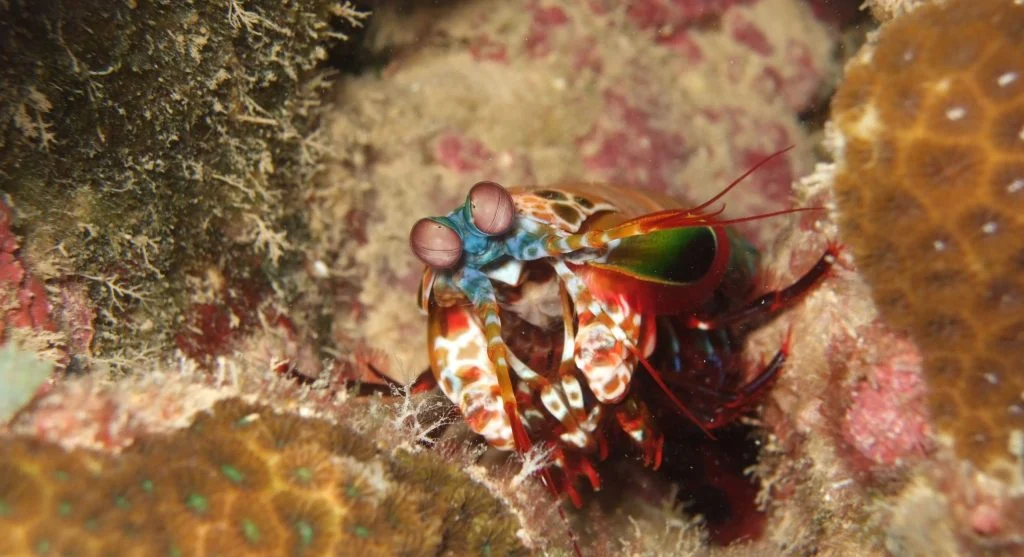
What Is a Mantis Shrimp?
Mantis shrimp are marine crustaceans found in tropical and subtropical waters around the world.
Although their name includes “shrimp,” they are very different from the shrimp commonly associated with seafood.
Researchers explain that mantis shrimp belong to a unique group known as stomatopods.
These animals have evolved specialized body structures that make them highly effective predators.
Their unusual appearance often includes bright colors, large eyes, and powerful front limbs.
The Strike Begins With Stored Energy
One of the most remarkable things about the mantis shrimp’s punch is that it does not depend entirely on muscle strength.
Researchers explain that specialized body structures allow the animal to store energy before releasing it suddenly.
This system works somewhat like a spring.
Energy builds up gradually and is then released almost instantly.
The result is a strike far stronger than muscle action alone could produce.
Different Species Use Different Hunting Strategies
Not all mantis shrimp hunt in the same way.
Researchers generally divide them into two main groups: smashers and spearers.
Smashers use club-like appendages to hit hard-bodied prey.
Spearers have sharp structures designed to capture soft-bodied animals.
Both methods are highly effective in the environments where each type lives.
Smashers Can Break Hard Shells
Some mantis shrimp specialize in hunting crabs, snails, and other animals protected by shells.
Researchers explain that these species use repeated strikes to crack hard outer coverings.
The force of the impact is astonishing for an animal of such small size.
Prey that would be difficult for many predators to eat becomes accessible.
This ability expands the mantis shrimp’s hunting opportunities.
The Strike Creates More Than Physical Impact
Scientists studying mantis shrimp punches discovered that the strike creates more than direct force.
The limb moves through water so quickly that it forms tiny bubbles.
When these bubbles collapse, they generate additional force.
Researchers explain that prey experiences both the first impact and the effects of the collapsing bubbles.
This combination makes the strike even more powerful and effective.
Exceptional Eyes Complement Powerful Weapons
Mantis shrimp are famous not only for their punches but also for their vision.
Researchers explain that their eyes are among the most complex in the animal kingdom.
They can detect details and wavelengths that many other animals cannot see.
Excellent vision helps them locate prey and identify threats.
When powerful strikes combine with advanced eyesight, the result is a highly effective hunting system.
Territory Defense Is Also Important
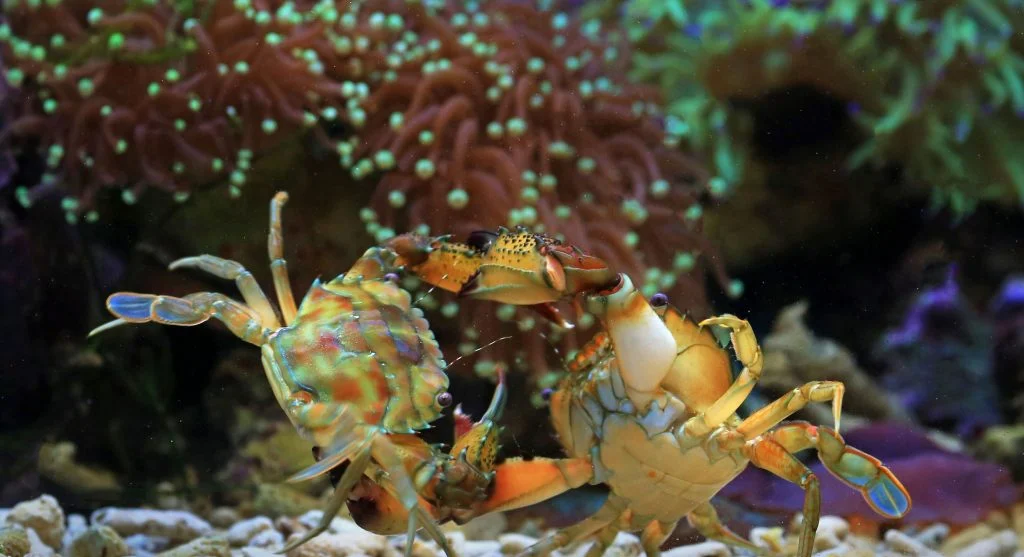
Hunting is not the only reason mantis shrimp have such powerful strikes.
Researchers explain that these animals often defend burrows and territories.
Competition for shelter can be intense in crowded marine habitats.
A powerful weapon gives them an advantage during disputes.
Territorial defense supports both survival and reproductive success.
Coral Reefs Provide Ideal Habitats
Many mantis shrimp species live in coral reef ecosystems.
These habitats provide abundant prey, hiding places, and opportunities for shelter building.
Researchers explain that the complexity of reefs supports high biodiversity.
Mantis shrimp play an important role within these communities.
Healthy reefs support many predator-prey relationships.
Evolution Produced a Specialized Predator
The mantis shrimp’s strike is the result of millions of years of evolutionary refinement.
Researchers explain that animals with more effective hunting abilities gained survival advantages.
Over time, natural selection favored increasingly efficient strike mechanisms.
The modern mantis shrimp reflects the outcome of this long process.
Its adaptations remain among the most impressive found in marine ecosystems.
Scientists Study Mantis Shrimp for Engineering Ideas
The mantis shrimp’s strike has attracted attention beyond wildlife research.
Engineers study the animal’s biological structures to better understand impact resistance and energy storage systems.
Researchers explain that nature often provides inspiration for technological innovation.
The mantis shrimp shows how biological systems can solve complex mechanical problems.
Its design continues to inspire scientific investigation.
Conservation Supports Marine Biodiversity
Mantis shrimp depend on healthy marine habitats.
Researchers explain that coral reefs and coastal ecosystems face pressures from pollution, habitat damage, and environmental change.
Protecting marine environments benefits countless species.
Conservation efforts help preserve the ecosystems where mantis shrimp thrive.
Healthy oceans support both biodiversity and scientific discovery.
Researchers Continue Making New Discoveries
Even after decades of study, scientists continue learning new details about mantis shrimp biology.
Research explores their vision, behavior, communication, and biomechanics.
Each discovery improves understanding of one of the ocean’s most remarkable predators.
The mantis shrimp shows that even small animals can possess extraordinary abilities.
Its punch remains one of nature’s most impressive feats of biological engineering.
Frequently Asked Questions
Q: Why do mantis shrimp punch so fast?
A: They use specialized structures that store and rapidly release energy.
Q: What do mantis shrimp eat?
A: Many species feed on crabs, snails, fish, and other marine animals.
Q: Are all mantis shrimp smashers?
A: No. Some species are spearers that capture prey with sharp appendages.
Q: Where do mantis shrimp live?
A: They are commonly found in tropical and subtropical marine environments.
Q: Why do scientists study mantis shrimp?
A: Their vision and striking mechanisms provide valuable insights into biology and engineering.
Key Takeaway
Mantis shrimp deliver one of the fastest punches in the animal kingdom because they use specialized structures that store and release energy with extraordinary efficiency. This remarkable adaptation helps them hunt, defend territory, and survive in competitive marine habitats. Their powerful strike continues to amaze researchers and remains one of the most impressive examples of natural engineering ever discovered.