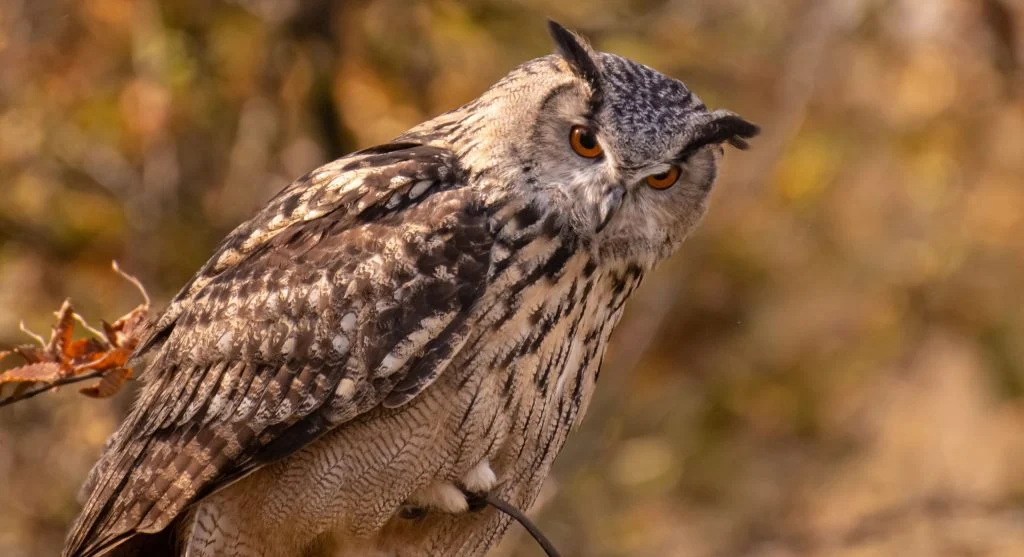
Owls have fascinated people for centuries. Their large eyes, silent flight, and nighttime hunting habits have inspired stories, legends, and myths in many cultures. One of the most common beliefs is that owls can turn their heads all the way around in a full 360-degree rotation.
This idea often appears in movies, books, and everyday conversations about wildlife. However, researchers who study owl anatomy explain that the myth is not completely accurate. Owls do have extraordinary neck flexibility, but they cannot rotate their heads in a complete circle.
Understanding how owls actually move reveals the remarkable adaptations that make them such successful predators.
Where the Myth Comes From
The myth likely began because owls can turn their heads much farther than humans can.
When an owl seems to look directly behind itself without moving its body, people may assume it can rotate its head completely around.
Wildlife experts explain that the movement looks especially dramatic because humans have a much more limited range of neck motion.
In reality, owls have specialized skeletal adaptations that allow them to turn their heads farther than most animals.
Owls Cannot Rotate Their Heads 360 Degrees
One of the most important facts about this myth is that owls cannot make a full head rotation.
Researchers explain that most owl species can rotate their heads about 270 degrees.
That is still extremely impressive, but it is not a complete circle.
A full 360-degree rotation would be physically impossible.
Even so, a 270-degree range gives owls major advantages when hunting and watching for danger.
Why Owls Need Such Flexible Necks
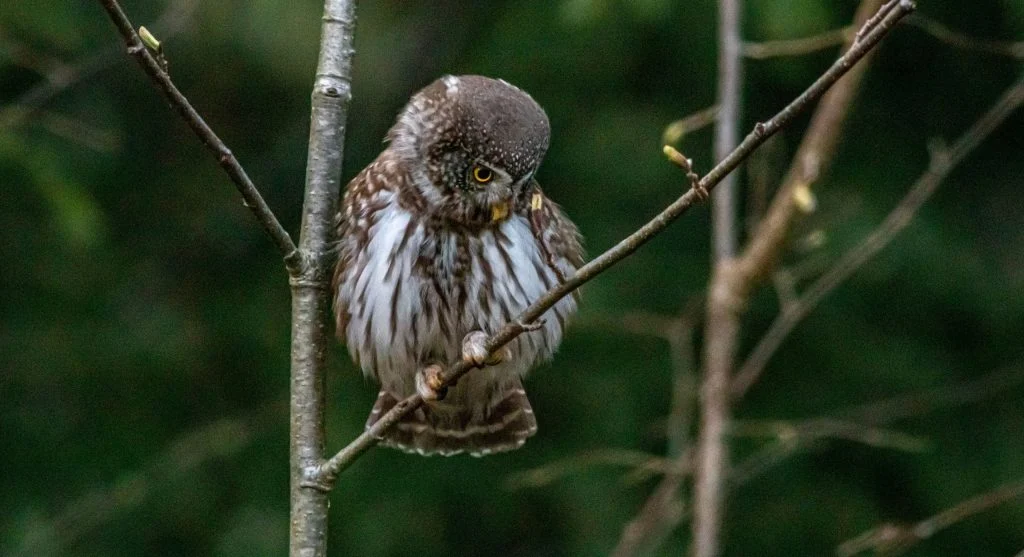
Unlike humans, owls have eyes that are mostly fixed inside their sockets.
Scientists explain that owl eyes are shaped more like tubes than round spheres.
This structure gives them excellent vision, but it also limits how much their eyes can move.
Because their eyes cannot shift easily, owls make up for it by turning their heads.
Being able to look in many directions without moving the body helps them stay alert while hunting.
Special Vertebrae Increase Flexibility
Owls have more bones in their necks than humans do.
Researchers explain that humans have seven neck vertebrae, while owls have fourteen.
This extra flexibility allows owls to move their heads much farther without injuring themselves.
The arrangement of these bones plays a major role in their impressive range of motion.
Over millions of years, evolution has refined this adaptation.
Blood Flow Remains Protected During Movement
For many years, scientists wondered how owls could turn their heads so far without cutting off blood flow to the brain.
Detailed studies revealed special blood vessel adaptations that help solve this problem.
These structures allow circulation to continue even during extreme head movement.
This is essential because owls need safe blood flow while rotating their necks.
Without these adaptations, such movement would be dangerous.
Night Hunting Requires Excellent Awareness
Owls are among the world’s most skilled nighttime predators.
Many species hunt in low-light conditions, where visibility is limited.
Researchers explain that wide head movement helps owls handle these nighttime challenges.
The ability to scan large areas quickly improves their chances of detecting prey.
This advantage plays an important role in their hunting success.
Hearing Works Together With Vision
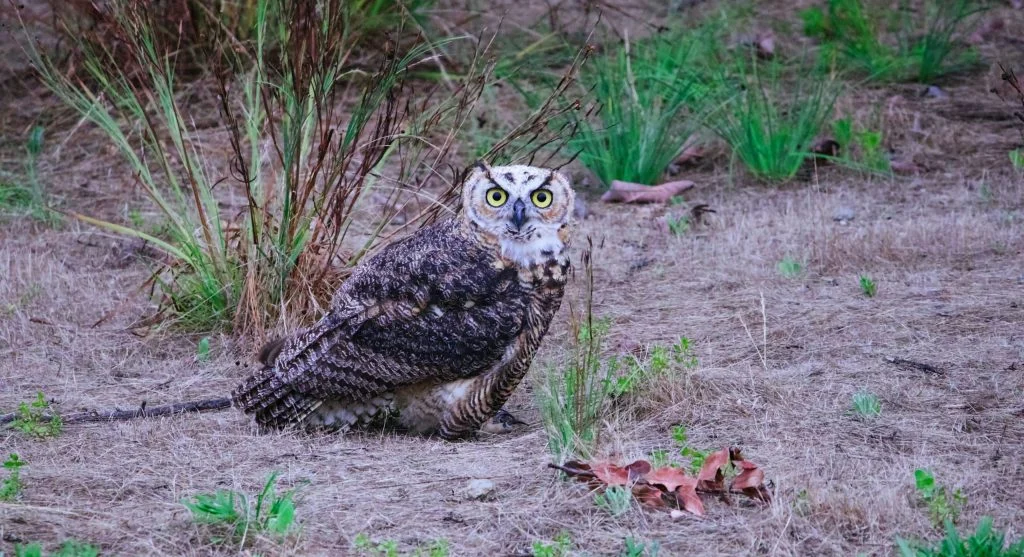
Owls do not depend on sight alone.
Scientists explain that many owl species also have exceptional hearing.
Some owls can locate prey using sound even when they cannot clearly see it.
Head movement helps them judge the direction of sounds more accurately.
When hearing and vision work together, owls become highly effective hunters.
Silent Flight Complements Their Hunting Strategy
Another famous owl adaptation is silent flight.
Specialized feathers help reduce noise while they fly.
Researchers explain that this quiet movement allows owls to approach prey without being noticed.
When silent flight combines with flexible neck movement and sharp senses, the result is a powerful hunting strategy.
These traits help make owls successful predators in many environments.
Different Owl Species Share Similar Adaptations
There are hundreds of owl species around the world.
Although they vary in size, habitat, and hunting style, many share similar neck adaptations.
Researchers explain that flexible head movement is useful whether an owl hunts in forests, grasslands, deserts, or wetlands.
This widespread trait shows how important the adaptation has been through evolution.
It gives many owl species a clear survival advantage.
Why Wildlife Myths Matter
Wildlife myths can be entertaining, but learning the facts often creates a deeper appreciation for nature.
Researchers explain that real animal adaptations are often even more fascinating than fictional stories.
The truth about owl anatomy shows how evolution can create highly specialized solutions to survival challenges.
Accurate information also supports better wildlife education and conservation awareness.
Researchers Continue Studying Bird Adaptations
Scientists continue to study how birds develop unique traits.
Research on owl anatomy, behavior, and sensory abilities helps improve understanding of predator ecology.
Each discovery reveals more about how these remarkable birds survive in different habitats around the world.
Modern technology continues to provide new insight into one of nature’s most recognizable birds.
Frequently Asked Questions
Q: Can owls turn their heads completely around?
A: No. Most owls can rotate their heads about 270 degrees, not 360 degrees.
Q: Why do owls move their heads so much?
A: Their eyes are relatively fixed, so head movement helps them look in different directions.
Q: How many neck vertebrae do owls have?
A: Most owls have fourteen neck vertebrae.
Q: Do all owl species share this ability?
A: Many owl species possess exceptional neck flexibility.
Q: Why is good head movement important?
A: It improves awareness, hunting success, and predator detection.
Key Takeaway
The popular belief that owls can turn their heads completely around is a myth. Still, the truth is remarkable. Owls can rotate their heads up to about 270 degrees because of specialized vertebrae, unique blood vessel adaptations, and evolutionary changes that compensate for limited eye movement. These features help make owls some of the most successful nighttime hunters in the animal kingdom.