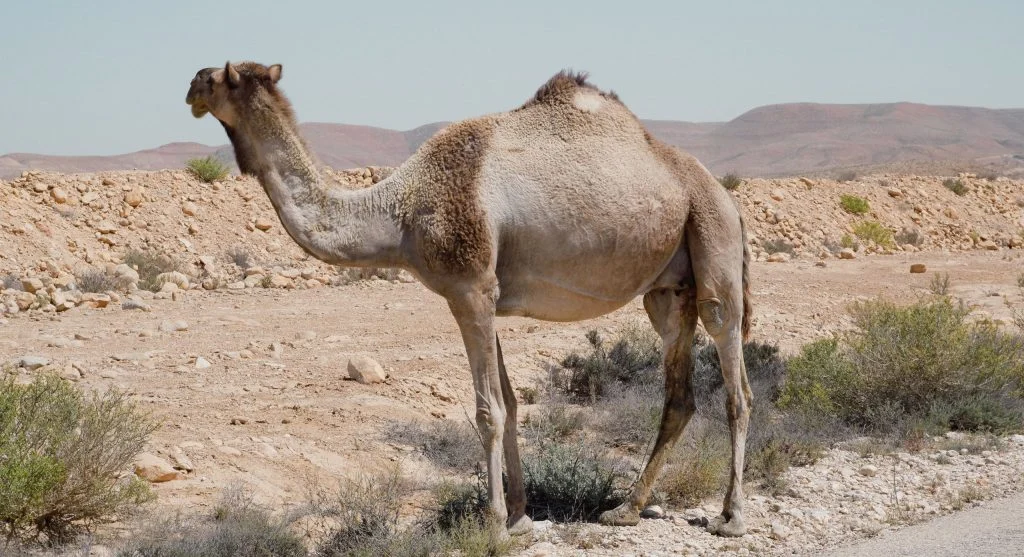
Few wildlife myths are repeated as often as the belief that camels store water inside their humps. The idea appears in children’s books, cartoons, documentaries, and everyday conversations around the world. Because camels are famous for surviving in some of Earth’s driest environments, many people naturally assume their humps function as giant water tanks.
Modern biological research, however, tells a different story. Camels do not store water in their humps. Instead, the hump contains stored fat that serves as an important energy reserve during periods when food is scarce. The ability of camels to survive long journeys across deserts comes from a combination of remarkable physiological adaptations rather than a hidden supply of water.
Researchers studying camel biology explain that the truth is even more fascinating than the popular myth. These desert mammals have evolved one of the most efficient water conservation systems found in the animal kingdom.
Where the Myth Began
The misconception likely developed because camels survive for long periods without drinking.
Early travelers crossing deserts observed camels remaining healthy while water sources were scarce.
Researchers explain that people naturally searched for a visible explanation.
Since the hump was the camel’s most distinctive feature, many assumed it stored water.
Although understandable, scientific research has shown this explanation to be incorrect.
What Is Actually Inside the Hump?
Instead of water, a camel’s hump contains fat.
Researchers explain that healthy adult camels store large amounts of body fat within one hump or, in the case of Bactrian camels, two humps.
This concentrated fat reserve serves as stored energy.
When food becomes difficult to find, the camel gradually uses these reserves to meet its nutritional needs.
Keeping fat concentrated in the hump also prevents excessive insulation across the rest of the body, making heat regulation more efficient.

Water Conservation Is the Real Secret
The camel’s ability to survive desert conditions comes from reducing water loss rather than carrying large water supplies.
Researchers explain that camels perspire less efficiently than many mammals, conserving valuable body fluids.
They can safely allow their body temperature to fluctuate more than most animals.
This reduces the need for constant sweating.
As a result, camels lose less water during extremely hot days.
Remarkably Efficient Kidneys
One of the camel’s greatest adaptations cannot be seen from the outside.
Researchers explain that camel kidneys are highly efficient at conserving water.
Very little water is lost through urine.
The urine produced is highly concentrated.
This adaptation allows camels to preserve body fluids for much longer than many other mammals.
Every drop of water becomes valuable in desert environments.
Dry Waste Helps Save Water
Camels also conserve moisture through digestion.
Researchers explain that their digestive system removes large amounts of water before waste leaves the body.
As a result, camel droppings are unusually dry.
This adaptation further reduces water loss.
Desert survival depends on minimizing unnecessary moisture expenditure.
They Can Drink Huge Amounts Quickly
Although camels can go for extended periods without drinking, they take full advantage of water whenever it becomes available.
Researchers explain that thirsty camels are capable of consuming enormous quantities of water within a short time.
This rapid rehydration helps restore fluids lost during long desert journeys.
The body then gradually uses these reserves while continuing to conserve water efficiently.
The hump itself plays no role in water storage.
Wide Feet Improve Desert Travel
Camels possess numerous other adaptations beyond water conservation.
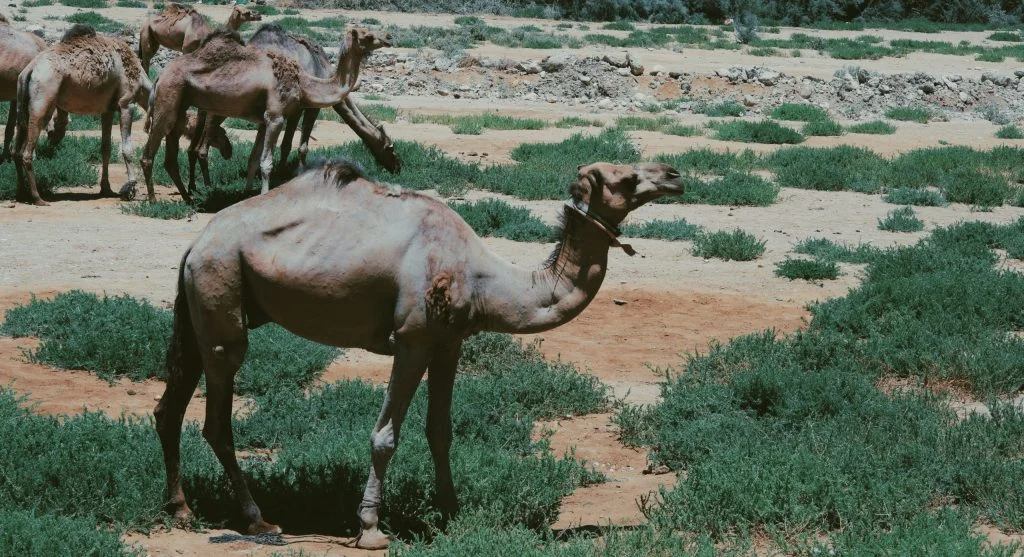
Researchers explain that their broad, padded feet distribute body weight across soft sand.
This reduces sinking and improves walking efficiency.
Travel across dunes becomes easier compared with animals having narrow hooves.
The feet function almost like natural snowshoes designed for deserts.
Long Eyelashes Protect Sensitive Eyes
Blowing sand presents another challenge.
Researchers explain that camels possess long eyelashes and protective eyelids that help shield their eyes during dust storms.
They can continue functioning even under difficult weather conditions.
These adaptations reduce irritation and improve visibility.
Eye protection is essential in environments with frequent wind-blown sand.
Nostrils Help Reduce Sand Intake
Camels also possess specialized nostrils.
Researchers explain that they can partially close these openings during sandstorms.
This reduces the amount of airborne sand entering the respiratory system.
The ability contributes to comfort and respiratory protection.
Multiple adaptations work together to improve survival.
Fat Can Produce Metabolic Water
Although humps do not contain water, stored fat does provide one indirect benefit.
Researchers explain that breaking down fat during metabolism produces small amounts of water.
This metabolic water contributes modestly to hydration.
However, it is not the primary reason camels survive without frequent drinking.
Their overall water conservation system remains far more important.
Researchers Continue Studying Camel Physiology
Scientists continue investigating how camels tolerate heat, dehydration, and environmental stress.
Researchers hope these studies may improve understanding of biology, veterinary medicine, and even future technologies for water conservation.
Every new discovery demonstrates how evolution has shaped one of the world’s most specialized mammals.
The truth behind the famous hump myth reveals an even more impressive story of adaptation.
Camels remain among nature’s greatest examples of survival in extreme environments.
Frequently Asked Questions
Q: Do camels store water in their humps?
A: No. Camel humps store fat, not water.
Q: Why do camels have humps?
A: Humps store fat that serves as an energy reserve during food shortages.
Q: How do camels survive without drinking?
A: They conserve water through specialized kidneys, reduced sweating, concentrated urine, and efficient body temperature regulation.
Q: Can camels drink a lot of water at once?
A: Yes. After dehydration, camels can consume large quantities of water very quickly.
Q: What type of camel has two humps?
A: The Bactrian camel has two humps, while the dromedary camel has one.
Key Takeaway
The idea that camels store water in their humps is one of nature’s most common myths. In reality, their humps store fat, which provides energy when food is scarce. Their ability to survive harsh desert conditions comes from an extraordinary water conservation system. With efficient kidneys, reduced sweating, specialized nostrils, and many other adaptations, camels have become true masters of life in some of Earth’s driest environments.