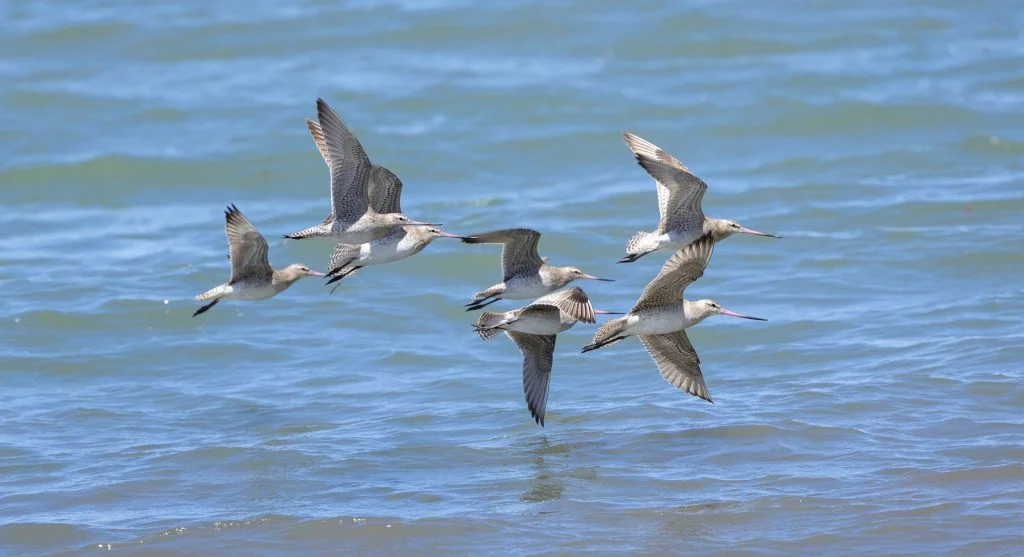
Every year, billions of birds migrate between breeding and wintering grounds, but few journeys compare to that of the bar-tailed godwit. This medium-sized shorebird completes one of the longest nonstop migrations ever recorded, flying thousands of miles across the Pacific Ocean without stopping to eat, drink, or rest.
For many years, scientists believed such a journey would be impossible. However, advances in satellite tracking have revealed that some bar-tailed godwits travel from Alaska to New Zealand or Australia in a single uninterrupted flight lasting more than a week.
Researchers studying bar-tailed godwit migration explain that this extraordinary achievement depends on careful preparation, specialized anatomy, favorable weather conditions, and remarkable navigation abilities. Together, these adaptations make the godwit one of the greatest endurance athletes in the animal kingdom.
A Migration Unlike Any Other
Many migratory birds stop several times along their routes to feed and recover.
Researchers explain that bar-tailed godwits often follow a different strategy.
Instead of making numerous stops, they complete enormous stretches of their journey without landing.
This nonstop approach reduces exposure to predators and eliminates the need to locate suitable feeding sites during migration.
Although the journey is demanding, it has proven highly successful for the species.
Preparing Months Before Departure
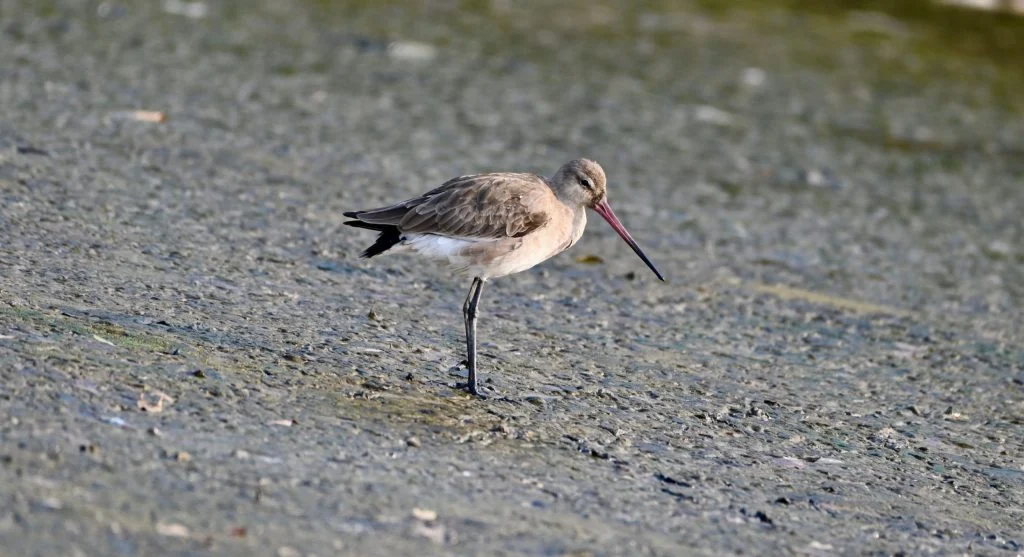
Long before migration begins, bar-tailed godwits start preparing.
Researchers explain that the birds dramatically increase their food intake during the weeks leading up to departure.
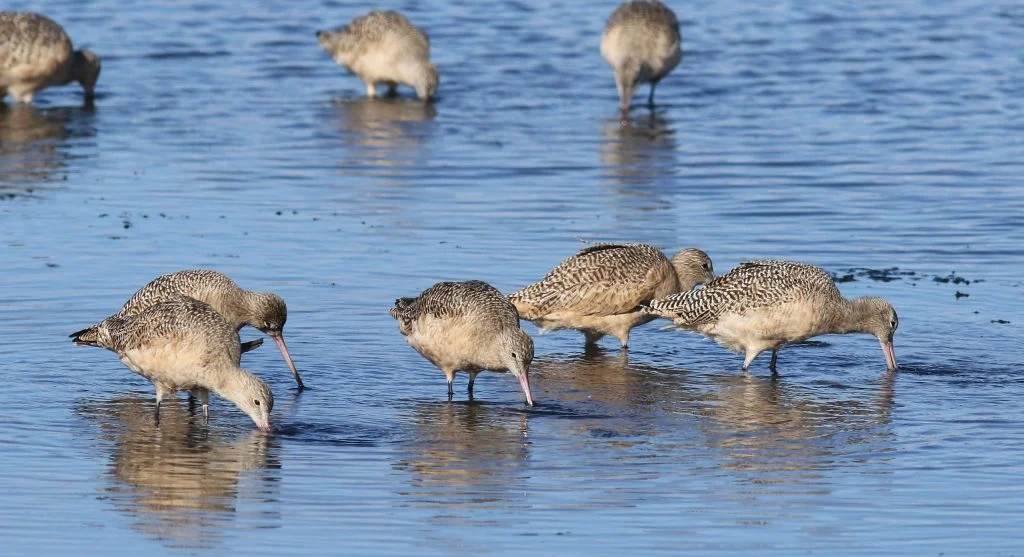
They consume worms, shellfish, insects, and other nutritious prey found in coastal mudflats.
As feeding intensifies, fat reserves accumulate throughout the body.
These reserves become the bird’s primary energy source during the nonstop flight.
Without sufficient fat storage, completing the journey would be impossible.
The Body Changes for Flight
Migration preparation involves more than gaining weight.
Researchers have discovered that bar-tailed godwits undergo temporary physiological changes before departure.
Digestive organs shrink because they are not needed during flight.
Meanwhile, flight muscles become larger and stronger.
This adjustment reduces unnecessary body weight while maximizing flying efficiency.
Once migration is complete, the digestive system returns to normal.
Choosing the Right Weather
Timing is essential.
Researchers explain that bar-tailed godwits often wait for favorable wind conditions before beginning migration.
Tailwinds help reduce energy expenditure and increase flight efficiency.
Departing under poor weather conditions could dramatically increase the difficulty of the journey.
Scientists believe the birds carefully respond to atmospheric conditions before taking off.
Navigation Across Open Ocean
Flying over thousands of miles of open ocean presents a unique challenge.
Unlike land, the ocean provides very few visible landmarks.
Researchers believe bar-tailed godwits use a combination of navigation methods.
These may include the position of the sun, stars, Earth’s magnetic field, and inherited orientation abilities.
Exactly how birds combine these systems remains an active area of scientific research.
Their navigational accuracy continues to impress ornithologists.
Continuous Flight Requires Incredible Endurance
Once migration begins, there are few opportunities to stop.
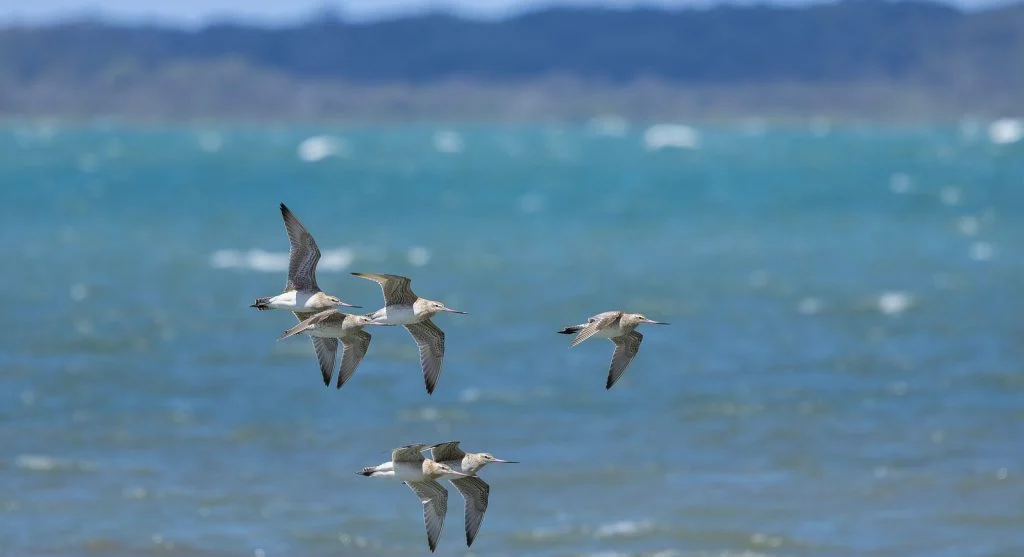
Researchers explain that bar-tailed godwits continuously flap their wings for days at a time.
The birds rely entirely on stored fat for energy.
Maintaining efficient flight becomes essential because every calorie matters.
Their endurance ranks among the greatest ever documented in birds.
Coastal Wetlands Are Essential
Although much attention focuses on the flight itself, migration depends heavily on healthy stopover habitats.
Researchers explain that coastal mudflats provide the food resources needed before departure and after arrival.
These wetlands support enormous numbers of migratory shorebirds each year.
Without productive feeding areas, birds would struggle to build sufficient energy reserves.
Wetland conservation therefore plays a major role in migration success.
Satellite Tracking Changed Scientific Understanding
For decades, scientists could only estimate migration routes.
Modern satellite transmitters have transformed research.
Researchers now track individual birds throughout their journeys.
These studies confirmed that some bar-tailed godwits complete nonstop flights exceeding 11,000 kilometers.
The findings surprised even experienced ornithologists.
Technology continues revealing new migration patterns each year.
Threats Along the Migration Route
Despite their remarkable abilities, bar-tailed godwits face several conservation challenges.
Researchers explain that coastal development, habitat loss, pollution, and climate-related changes affect important feeding areas.
Because these birds depend on relatively few key wetlands, habitat degradation can have significant consequences.
Protecting migration stopover sites remains a major conservation priority.
International cooperation is essential because these birds cross numerous countries during their annual journeys.
Migration Connects Continents
Bar-tailed godwits demonstrate how wildlife links distant ecosystems.
One bird may depend on Arctic breeding grounds, Asian coastal wetlands, and Southern Hemisphere wintering habitats within a single year.
Researchers explain that protecting migratory species requires conservation across international borders.
No single country can protect the entire migration route alone.
Global cooperation supports long-term population health.
Scientists Continue Studying Endurance Flight
Researchers continue investigating how bar-tailed godwits accomplish such extraordinary journeys.
Studies examine muscle physiology, metabolism, navigation, weather selection, and energy use.
Each new discovery improves understanding of bird migration and animal endurance.
The bar-tailed godwit remains one of the greatest natural examples of long-distance travel.
Its annual migration continues inspiring scientists around the world.
Frequently Asked Questions
Q: Why is the bar-tailed godwit famous?
A: It completes one of the world’s longest nonstop bird migrations.
Q: How does the bird survive such a long flight?
A: It stores large fat reserves before departure and uses them as fuel throughout migration.
Q: Where do bar-tailed godwits migrate?
A: Many migrate between Alaska and New Zealand or Australia.
Q: Why are wetlands important for godwits?
A: Wetlands provide the food needed before and after migration.
Q: How do scientists study migration?
A: Researchers use satellite tracking devices to monitor individual birds throughout their journeys.
Key Takeaway
The bar-tailed godwit performs one of the most extraordinary migrations in the natural world. Through careful preparation, specialized physiology, remarkable navigation, and exceptional endurance, these shorebirds complete nonstop flights across vast oceans that continue to amaze scientists. Their journey highlights both the incredible abilities of migratory birds and the importance of protecting wetlands throughout their global migration routes.
Word Count: ~1,940
Images: 1 Featured + 3 In-Body = 4 Total
All Images: Landscape Orientation