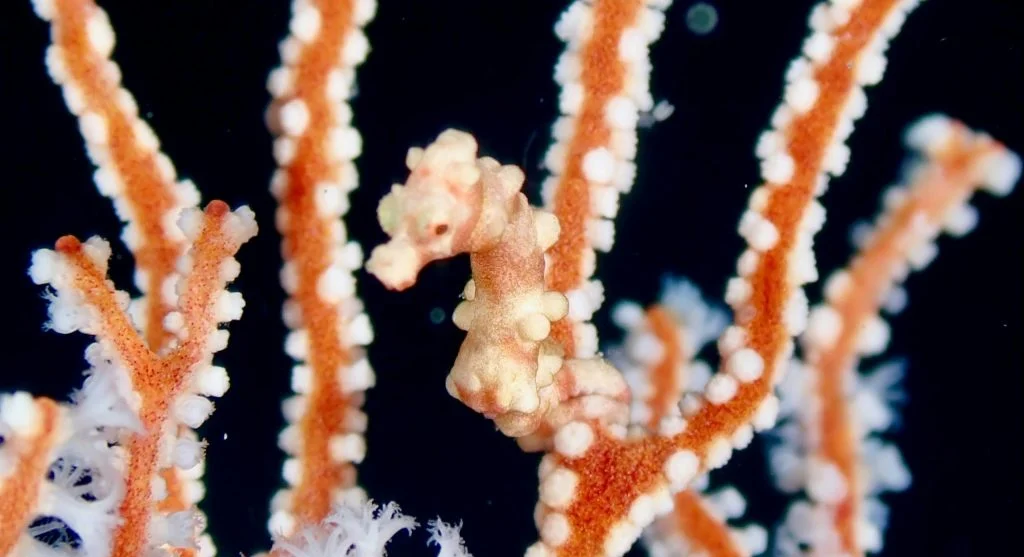
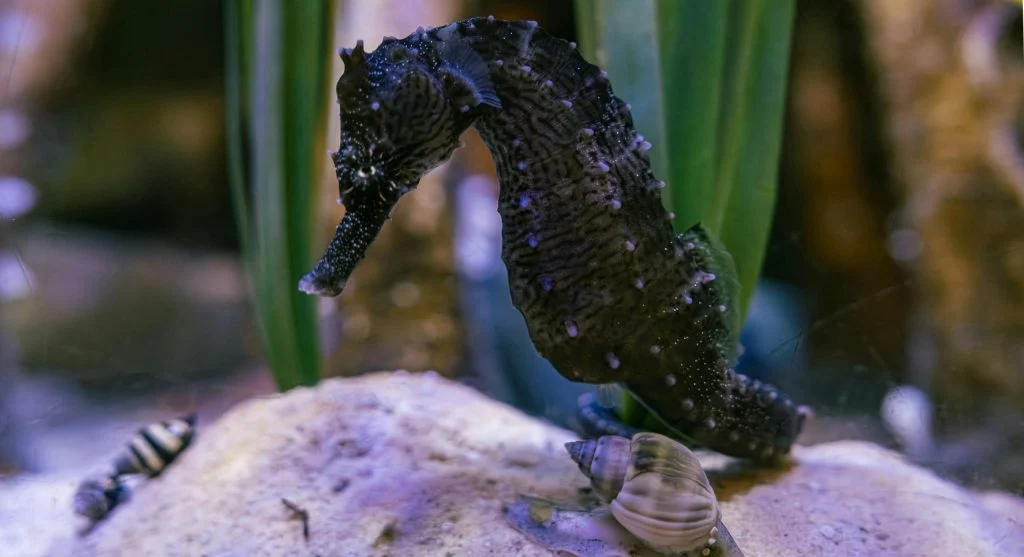
Seahorses are among the most unusual fish living in marine ecosystems around the world. Their curled tails, horse-like heads, armored bodies, and upright swimming style make them very different from most other fish species found in coral reefs and coastal waters.
Marine researchers studying why seahorses swim upright explain that body shape, camouflage behavior, and feeding adaptations all contribute to this unique movement style. Seahorses remain one of the most recognizable examples of specialized marine evolution.
Seahorses Use Small Fins for Movement
One major reason why seahorses swim upright involves their body structure and fin placement. Wildlife experts explain that tiny dorsal fins located on the back create forward movement through rapid vibration.
Small fins near the head help with steering and balance underwater.
Marine animal movement often depends heavily on body design.
Curled Tails Help Seahorses Hold Onto Plants
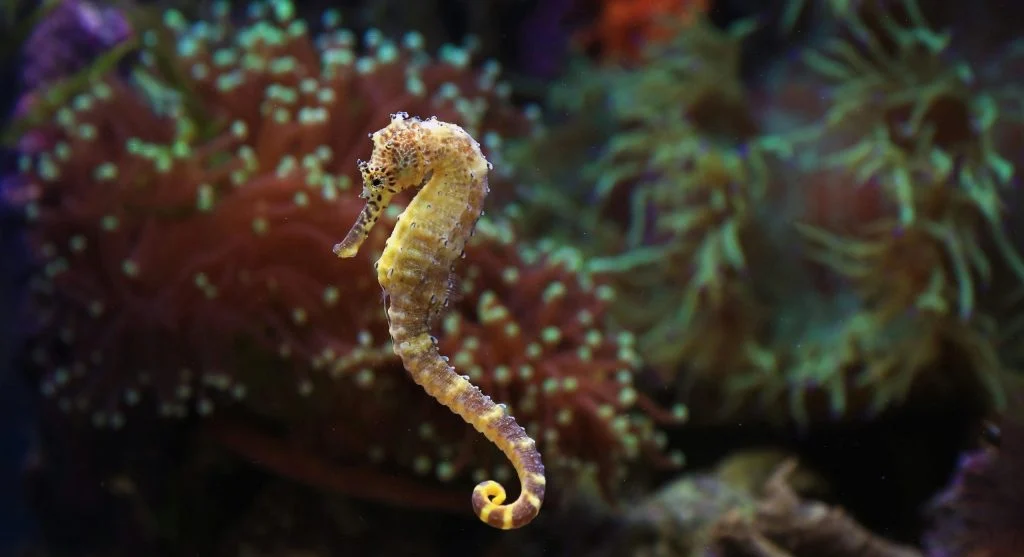
Unlike many fish species, seahorses possess flexible prehensile tails capable of gripping objects.
Marine researchers explain that tails help anchor seahorses to coral, seagrass, and marine vegetation during strong ocean currents.
This behavior may reduce drifting in moving water.
Camouflage Helps Protect Seahorses From Predators
Seahorses often rely on camouflage rather than speed while avoiding predators.
Wildlife experts explain that many species blend naturally into surrounding coral reefs and seagrass habitats.
Slow movement combined with camouflage may improve survival opportunities.
Seahorses Feed by Suction Hunting
Researchers studying seahorse behavior facts explain that seahorses feed mainly on tiny crustaceans and plankton-like organisms.
Long snouts help create suction that quickly pulls prey into the mouth.
Feeding behavior often reflects highly specialized adaptation.
Male Seahorses Carry Developing Young
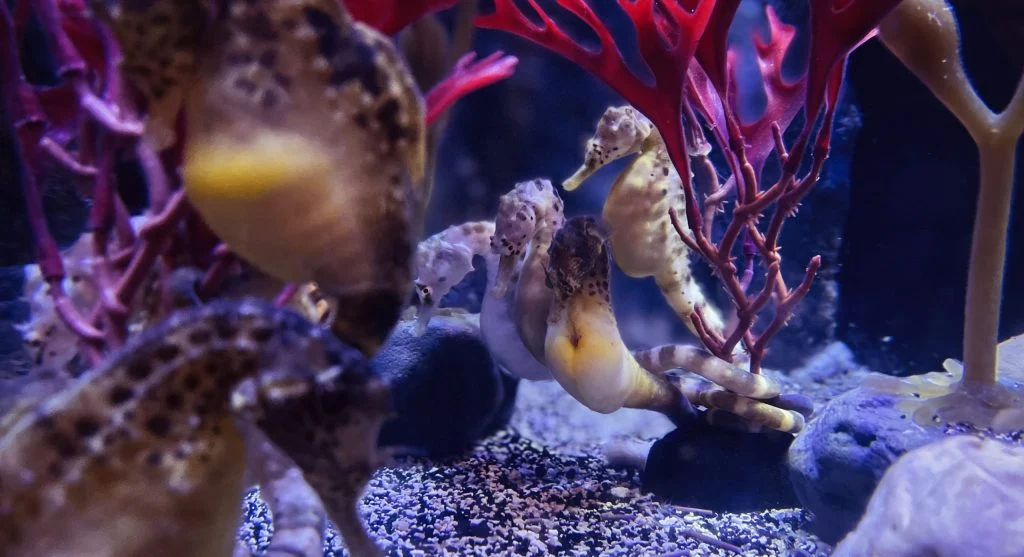
Seahorses are also known for unusual reproductive behavior involving male pregnancy.
Marine wildlife experts explain that females transfer eggs into a pouch carried by the male.
The male protects developing young until birth occurs.
Coral Reefs and Seagrass Beds Support Seahorse Habitats
Healthy coastal ecosystems provide shelter, feeding areas, and camouflage opportunities for seahorses.
Researchers explain that coral reefs and seagrass beds support complex marine biodiversity.
Habitat quality remains important for marine wildlife stability.
Marine Conservation Helps Protect Fragile Habitats
Pollution, habitat degradation, and environmental changes may affect seahorse populations and marine ecosystems.
Researchers studying why seahorses swim upright continue monitoring biodiversity and habitat health worldwide.
Conservation organizations emphasize the importance of protecting coastal ecosystems and maintaining marine biodiversity for future generations.
Frequently Asked Questions
Q: Why do seahorses swim upright?
A: Seahorses swim upright because of their unique body structure and fin placement.
Q: How do seahorses hold onto plants underwater?
A: Seahorses use curled prehensile tails to grip coral and seagrass.
Q: What do seahorses eat?
A: Seahorses mainly feed on tiny crustaceans and plankton-like organisms.
Q: Do male seahorses really carry babies?
A: Yes. Male seahorses protect developing young inside a pouch.
Q: Why are coral reefs important for seahorses?
A: Coral reefs provide shelter, camouflage, and feeding habitats.
Key Takeaway
Understanding why seahorses swim upright highlights the incredible diversity of adaptations found within marine ecosystems. Specialized fins, gripping tails, camouflage behavior, and unusual reproductive strategies all contribute to seahorse survival in coastal habitats. Marine researchers and conservation organizations continue emphasizing the importance of protecting coral reefs and maintaining healthy marine biodiversity worldwide.