Few birds symbolize healthy lakes, rivers, and coastal wetlands better than the osprey. Known for their impressive fishing skills and enormous stick nests, these birds of prey depend on clean waterways filled with abundant fish. Throughout history, ospreys nested across large parts of North America, Europe, Asia, and Australia. However, habitat loss, environmental pollution, and the removal of large nesting trees caused populations to decline in many regions during the twentieth century.
Today, conservation efforts are helping many osprey populations recover. One of the most successful strategies involves installing artificial nesting platforms in suitable habitats. These elevated structures provide safe nesting locations where natural sites may no longer exist.
Researchers studying osprey conservation explain that nesting platforms have become one of the most effective tools for supporting breeding populations. In many areas, birds quickly accept these structures, raise healthy chicks, and gradually recolonize wetlands they abandoned decades ago.
Ospreys Depend on Water
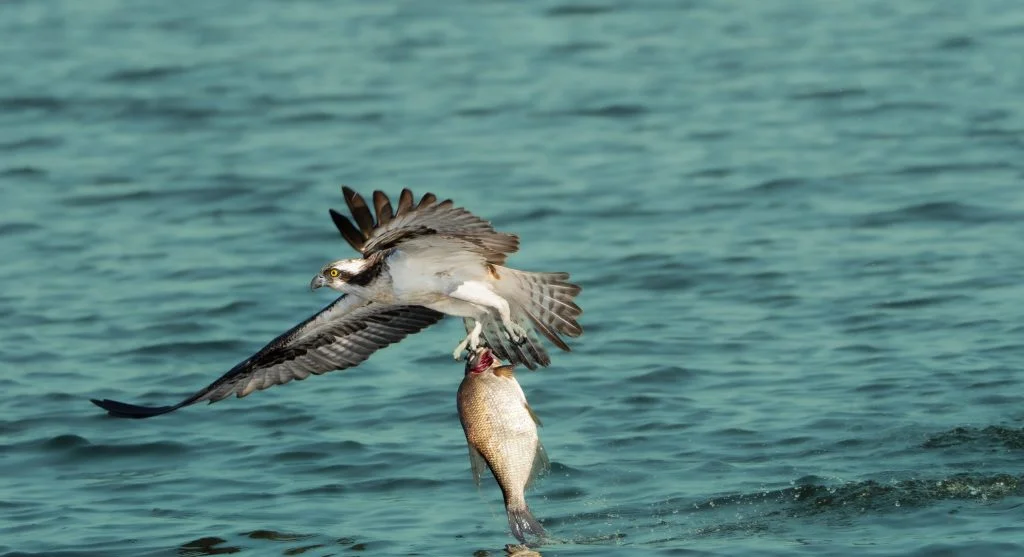
Unlike many birds of prey that hunt mammals or reptiles, ospreys feed almost entirely on fish.
Researchers explain that this specialized diet keeps them closely associated with lakes, rivers, reservoirs, estuaries, and coastal environments.
Healthy fish populations are essential for successful breeding.
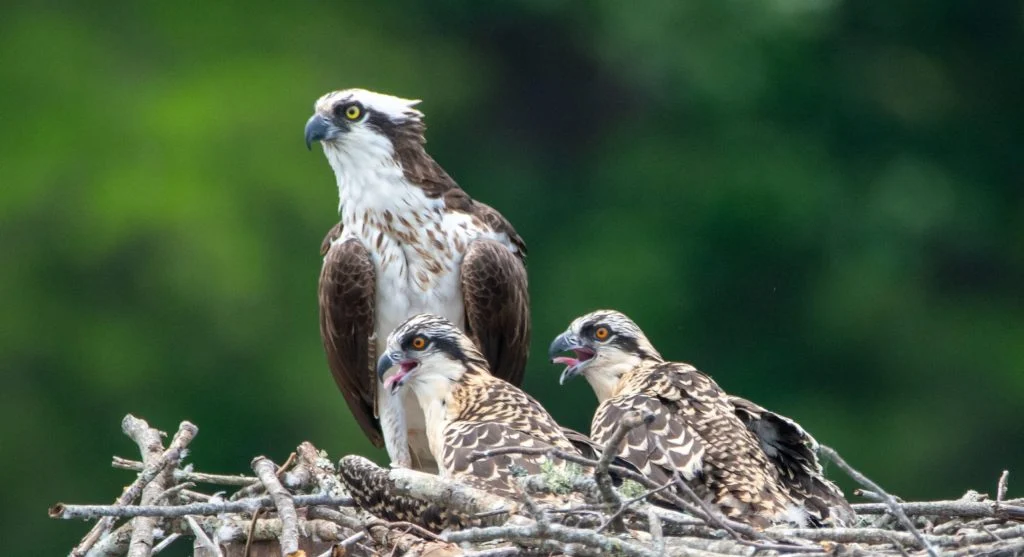
Parents must catch enough food to feed rapidly growing chicks throughout the nesting season.
Without reliable fishing habitat nearby, suitable nesting locations become much less valuable.
Large Nests Require Strong Foundations
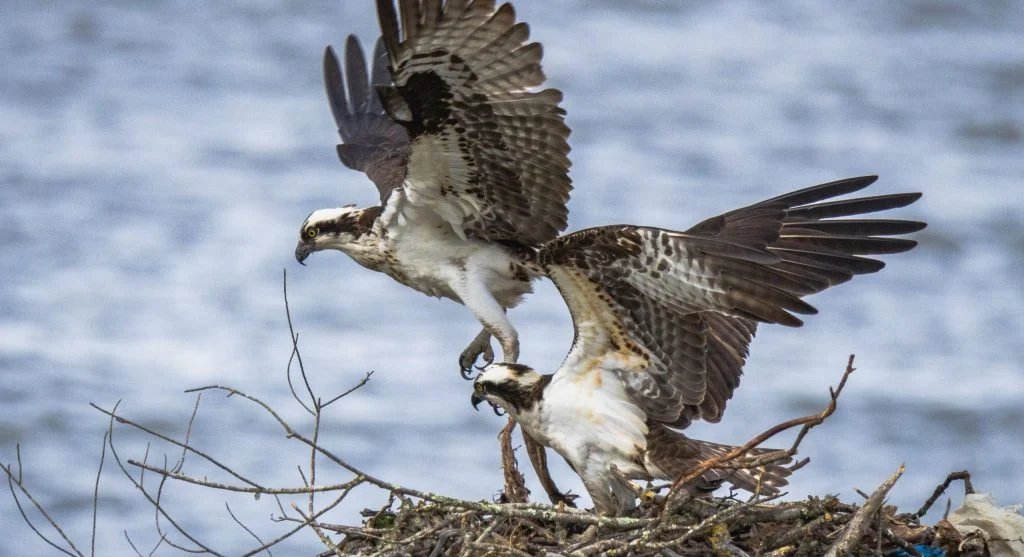
Osprey nests can become surprisingly large.
Researchers explain that breeding pairs often reuse the same nest year after year, adding new sticks each season.
Over time, some nests reach several feet across and weigh hundreds of pounds.
Such heavy structures require strong support.
Historically, large dead trees, cliffs, and rocky outcrops provided ideal nesting sites.
Today, many of those natural structures have disappeared due to development and changing landscapes.
Why Artificial Platforms Work
Artificial nesting platforms imitate the characteristics of natural nesting locations.
Researchers explain that most platforms consist of tall poles topped with flat wooden or metal structures that support large stick nests.
The elevated design keeps nests above floodwaters and provides excellent visibility.
Ospreys prefer locations where they can easily monitor the surrounding area for predators.
Many platforms are installed near lakes, rivers, marshes, or reservoirs where fishing opportunities are abundant.
The combination of safety and food availability makes these locations highly attractive.
Returning Birds Often Reuse Successful Sites
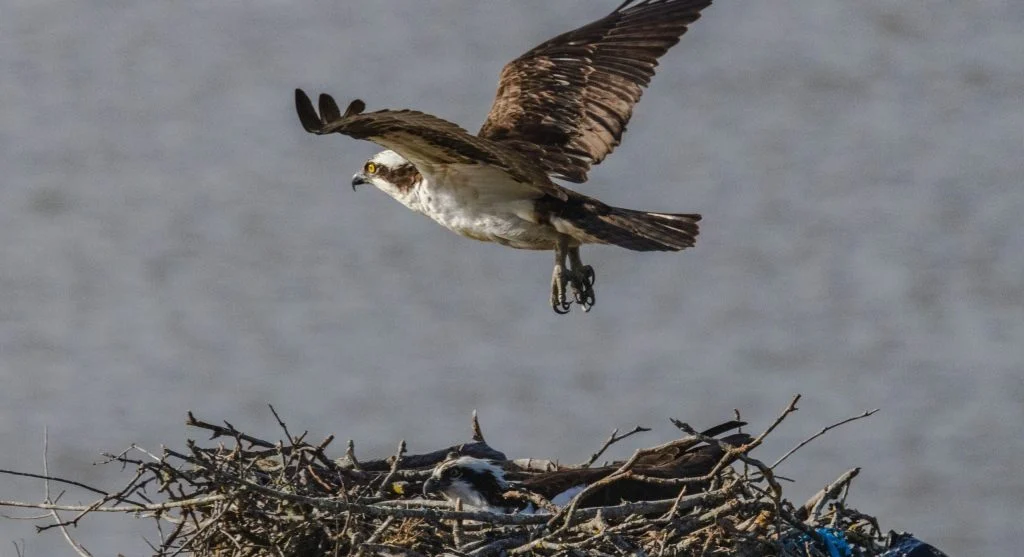
Ospreys display strong nest-site fidelity.
Researchers explain that successful breeding pairs frequently return to the same nest year after year.
Once an artificial platform becomes established as a nesting location, it may remain occupied for many breeding seasons.
Each successful year increases the value of the site.
Long-term occupancy also contributes to stable local populations.
In some regions, nesting platforms have supported generations of returning birds.
Platforms Reduce Competition
Suitable nesting locations can be limited.
Researchers explain that providing additional nesting platforms reduces competition for safe breeding sites.
Young adults entering the breeding population gain more opportunities to establish territories.
This increase in available nesting habitat can contribute to population growth.
More successful breeding pairs often lead to healthier regional populations over time.
Healthy Wetlands Support Successful Breeding
Nesting platforms alone are not enough.
Researchers explain that surrounding habitats must also remain healthy.
Wetlands containing abundant fish, clean water, and minimal disturbance provide the best breeding conditions.
Conservation projects therefore often combine habitat restoration with nest platform installation.
Protecting both nesting sites and feeding areas creates the greatest long-term benefits.
Researchers Monitor Nest Success
Conservation programs carefully monitor artificial nesting platforms.
Researchers record arrival dates, nesting activity, egg production, chick survival, and fledging success.
This information helps evaluate whether individual platforms are effective.
Long-term monitoring also reveals broader population trends.
Data collected over many years guides future conservation planning.
Each successful nest contributes valuable scientific information.
Community Participation Supports Conservation
Many osprey conservation projects involve local communities.
Volunteers often assist with platform maintenance, habitat monitoring, and educational programs.
Researchers explain that public involvement increases awareness of wetland conservation.
Schools, wildlife organizations, and community groups frequently participate in monitoring nesting pairs.
Citizen science projects provide additional information while encouraging environmental stewardship.
These partnerships strengthen long-term conservation efforts.
Climate and Weather Influence Breeding
Although platforms provide safe nesting locations, weather still affects breeding success.
Researchers explain that storms, flooding, heat waves, and food availability influence chick survival.
Understanding these environmental factors helps improve conservation strategies.
Scientists continue investigating how changing climate conditions may affect osprey populations in different regions.
Adaptive management remains an important part of modern wildlife conservation.
Ospreys Are Indicators of Healthy Ecosystems
Because ospreys rely almost entirely on fish, their populations often reflect the condition of aquatic ecosystems.
Researchers explain that healthy osprey populations generally indicate productive fisheries and relatively clean waterways.
Monitoring breeding success therefore provides useful information about wetland health.
Protecting ospreys frequently benefits many other aquatic species.
Their conservation has broader ecological significance.
Modern Technology Improves Research
Scientists now use GPS transmitters, nest cameras, drones, and satellite imagery to study osprey behavior.
These technologies reveal migration routes, hunting areas, and breeding success with unprecedented detail.
Researchers explain that modern monitoring helps identify important habitats requiring protection.
The information also improves understanding of how birds respond to environmental changes.
Each technological advance strengthens future conservation planning.
Artificial Platforms Continue Expanding
Many regions continue installing new nesting platforms each year.
Researchers explain that successful projects often inspire similar efforts elsewhere.
As wetlands are restored and suitable nesting structures become available, ospreys frequently recolonize former breeding areas.
This recovery demonstrates how targeted conservation actions can produce measurable results.
Artificial nesting platforms remain one of the clearest examples of practical wildlife management benefiting both birds and ecosystems.
Frequently Asked Questions
Q: Why do conservationists build osprey nesting platforms?
A: They provide safe nesting sites where natural trees or cliffs are no longer available.
Q: Do ospreys use artificial platforms?
A: Yes. Many breeding pairs readily accept well-designed platforms placed near suitable fishing habitat.
Q: What do ospreys eat?
A: Ospreys feed primarily on fish caught from lakes, rivers, reservoirs, and coastal waters.
Q: Why are wetlands important for ospreys?
A: Wetlands provide abundant fish, which are essential for raising chicks successfully.
Q: How do researchers monitor osprey populations?
A: Scientists monitor nests, use GPS tracking, install nest cameras, and conduct regular field surveys.
Key Takeaway
Artificial nesting platforms have become one of the most effective conservation tools for ospreys. By offering safe breeding sites near healthy fishing areas, these structures help birds return to historic wetlands, improve nesting success, and support stronger regional populations. Their success shows how well-planned conservation efforts can restore wildlife while also supporting the health of entire freshwater ecosystems.