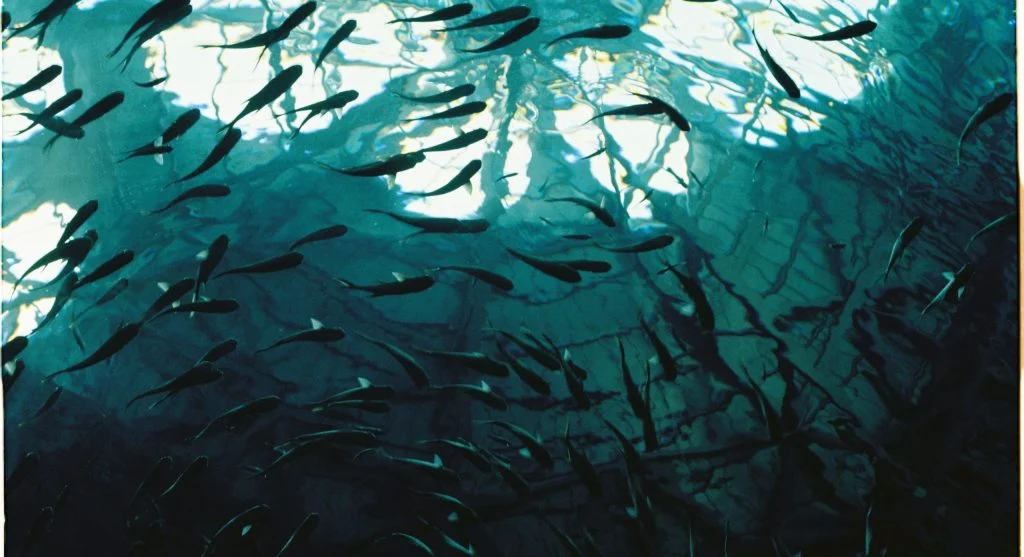
The ocean is filled with remarkable creatures, but few look as unusual as flying fish. These sleek marine fish seem to bend the rules of nature by launching themselves out of the water and gliding through the air for surprising distances. To someone watching from a boat, a group of flying fish can look almost like small birds skimming just above the waves.
Despite their name, flying fish do not actually fly the way birds or bats do. Instead, they rely on special body adaptations that help them glide efficiently after they leave the water. Researchers who study why flying fish glide through the air explain that this behavior developed mainly as a defense against predators.
Found in tropical and subtropical oceans around the world, flying fish have fascinated sailors, scientists, and wildlife enthusiasts for centuries. Their unusual ability shows how animals can develop highly specialized survival strategies in difficult environments.
Flying Fish Are Built for Speed
One key reason flying fish can launch from the water so effectively is their streamlined body shape.
Marine biologists explain that these fish are built for fast movement through the ocean. Their bodies reduce drag, while strong tail muscles create the acceleration needed for a powerful burst of speed.
Before taking off, a flying fish may swim extremely fast near the surface. That sudden speed gives it the momentum required to break through the water and begin gliding.
Without this rapid acceleration, gliding would not be possible.
Large Pectoral Fins Act Like Wings
The most recognizable feature of flying fish is their large pectoral fins.
Researchers explain that these fins spread outward once the fish leaves the water.
They do not flap like bird wings, but they do create lift, allowing the fish to stay in the air for a short time.
In this way, the fins work much like the wings of a glider aircraft.
This adaptation helps flying fish travel impressive distances above the ocean surface.
Escaping Predators Is the Main Goal
Avoiding predators is considered the main reason flying fish glide.
In the open ocean, many predators hunt close to the surface. Tuna, mahi-mahi, marlin, and other fast-swimming fish often chase smaller prey.
Researchers explain that launching into the air gives flying fish a temporary escape route that most marine animals do not have.
By leaving the water, flying fish can quickly create distance between themselves and predators chasing them.
This strategy may greatly improve their chances of survival.
Glides Can Cover Surprising Distances
Many people are surprised by how far flying fish can move through the air.
Scientists have recorded glides that stretch hundreds of feet when conditions are favorable.
Some species also use ocean winds to stay airborne longer.
Researchers explain that gliding success depends on speed, wind direction, wave conditions, and body size.
Longer glides help flying fish get the most benefit from escaping predators.
Ocean Winds Provide Additional Assistance
Flying fish do not depend only on momentum.
Marine researchers explain that wind currents above the ocean surface can help support longer glides.
When conditions are favorable, a flying fish may remain airborne much longer than expected.
Using natural air currents improves the efficiency of the glide.
This shows how animal behavior often works together with environmental conditions.
Multiple Species Exist Worldwide
Flying fish are not just one species.
Researchers have identified dozens of flying fish species living in warm oceans around the world.
Different species vary in size, color, and gliding ability.
Some have larger fins that improve their performance in the air.
Even with these differences, all flying fish share the same basic survival strategy.
Life Near the Surface Comes With Risks
The ocean surface offers access to food and favorable environmental conditions.
However, it also exposes animals to many predators.
Scientists explain that many species living near the surface have evolved special defenses to survive.
Flying fish are one of the most dramatic examples.
Their ability to move from water into air gives them a unique advantage.
Young Flying Fish Must Learn Quickly
Survival in the open ocean can be difficult.
Researchers believe young flying fish quickly develop the swimming and gliding skills needed to avoid predators.
Natural selection favors individuals that can perform strong escape movements.
Over countless generations, these adaptations have become more refined.
Flying Fish Influence Marine Food Webs
Flying fish play an important role in ocean ecosystems.
They feed on plankton and other small organisms, while also serving as prey for larger predators.
Researchers explain that their abundance can affect wider marine food webs.
Healthy flying fish populations help support ecosystem balance.
Understanding these relationships gives scientists a clearer picture of ocean biodiversity.
Researchers Continue Studying Gliding Behavior
Modern technology has made it easier to study marine wildlife.
Scientists continue to examine how flying fish improve their gliding performance and respond to predator threats.
This research also helps show how environmental changes may affect marine ecosystems.
Each new discovery adds more insight into one of the ocean’s most remarkable adaptations.
Frequently Asked Questions
Q: Can flying fish actually fly?
A: No. Flying fish glide through the air rather than actively flying like birds.
Q: Why do flying fish leave the water?
A: They primarily glide to escape predators.
Q: How far can flying fish glide?
A: Some glides can extend hundreds of feet under favorable conditions.
Q: What helps flying fish stay airborne?
A: Large pectoral fins create lift while momentum and wind support the glide.
Q: Where are flying fish found?
A: They are commonly found in tropical and subtropical oceans worldwide.
Key Takeaway
Flying fish glide through the air as a highly effective survival strategy that helps them escape predators in the open ocean. Their streamlined bodies, powerful swimming ability, and wing-like fins allow them to perform one of the most extraordinary movements in marine wildlife. These remarkable fish show how evolution can create creative solutions to environmental challenges.