Some animals immediately draw attention because of their unusual physical features. Among the most distinctive mammals on Earth is the saiga antelope, a grassland species known for its oversized, flexible nose. At first glance, the nose can look almost out of place, which leads many people to wonder why evolution produced such an unusual design.
Researchers studying saiga antelopes have found that the animal’s nose is much more than a strange-looking feature. It plays an important role in survival by helping these antelopes deal with dust, extreme temperatures, and difficult environmental conditions across wide grassland ecosystems.
The saiga’s remarkable adaptation shows how evolution can shape animals in unexpected ways. What may seem strange at first often has a practical purpose that improves survival.
A Species Built for Open Grasslands
Saiga antelopes live in large grassland and semi-desert regions where conditions can be harsh.
Researchers explain that these habitats often experience strong winds, dust storms, and major seasonal temperature changes.
Animals living in these environments need specialized adaptations that help them handle such challenges.
The saiga’s distinctive nose is one of the most important examples.
Over thousands of generations, natural selection favored individuals better suited to surviving these difficult conditions.
Filtering Dust During Migration
One major reason saiga antelopes have unusual noses is air filtration.
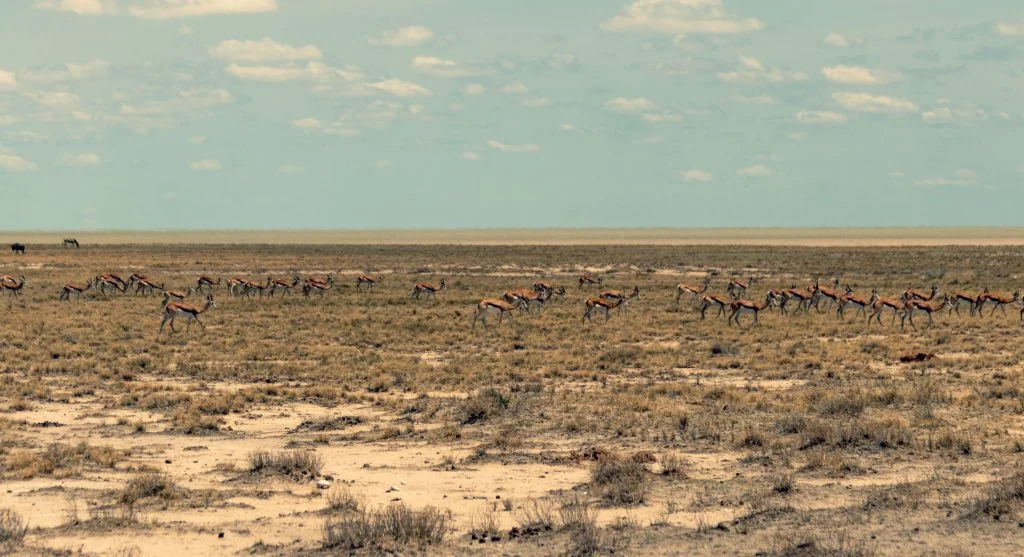
During migration, large herds may move across dry landscapes and kick up large amounts of dust.
Researchers explain that the enlarged nasal passages help filter dust particles before they reach sensitive parts of the respiratory system.
This reduces irritation and helps the animal breathe more efficiently.
For animals traveling long distances, clean airflow is extremely important.
Cold Winters Create Additional Challenges
The grassland regions where saiga antelopes live can experience extremely cold winters.
Researchers explain that winter temperatures may drop well below freezing.
Breathing icy air directly can place stress on the respiratory system.
The saiga’s nose helps warm incoming air before it reaches the lungs.
This adaptation improves comfort and supports survival during harsh weather.
Cooling Air During Hot Summers
The same regions that experience freezing winters can become very hot during summer.
Scientists explain that the nasal structure also helps manage airflow during warm conditions.
The nose assists with temperature regulation by modifying incoming air.
This flexibility allows saigas to cope with a wide range of environmental conditions throughout the year.
Adaptability is essential for survival in unpredictable climates.
Large Herds Provide Protection
Saiga antelopes often travel in large groups.
Researchers explain that herd behavior improves predator detection and lowers individual risk.
With many animals watching the landscape, the group has a better chance of spotting danger.
Group living also supports migration and social interaction.
The combination of behavioral and physical adaptations helps saigas survive.
Exceptional Speed Helps Avoid Predators
Along with their unusual noses, saigas are impressive runners.
Wildlife experts explain that speed plays an important role in avoiding predators.
When danger approaches, herds can move quickly across open landscapes.
Fast movement helps reduce the chances of a successful predator attack.
Open habitats often favor animals capable of rapid travel.
Seasonal Migration Is Important
Many saiga populations take part in seasonal migrations.
Researchers explain that migration allows the animals to follow better conditions and food resources.
These journeys can cover considerable distances.
Efficient breathing and dust filtration become especially important during long travel.
The unusual nose provides benefits throughout these seasonal movements.
Grasslands Support Unique Wildlife Communities
Grasslands are among the world’s most important ecosystems.
They support many mammals, birds, reptiles, insects, and plant communities.
Researchers explain that saiga antelopes contribute to ecosystem dynamics through grazing and interactions with other species.
Healthy grasslands support biodiversity and ecological balance.
Protecting these habitats benefits many forms of wildlife.
Conservation Efforts Have Become Increasingly Important
Scientists continue monitoring saiga populations across their range.
Researchers explain that habitat changes, disease outbreaks, and environmental pressures can affect population numbers.
Conservation programs focus on habitat protection, migration routes, and population monitoring.
Long-term success depends on maintaining healthy ecosystems.
International cooperation often plays an important role in saiga conservation.
Researchers Continue Studying Adaptations
The unusual appearance of the saiga’s nose continues to attract scientific interest.
Researchers study how airflow, filtration, and temperature regulation work inside the nasal structure.
Each new discovery improves understanding of how animals adapt to environmental challenges.
The saiga remains one of the most fascinating examples of specialized evolution among large mammals.
Its appearance is a reminder that nature often prioritizes function over appearance.
Frequently Asked Questions
Q: Why do saiga antelopes have large noses?
A: Their noses help filter dust and regulate air temperature.
Q: Where do saiga antelopes live?
A: They inhabit grasslands and semi-desert regions of Central Asia.
Q: Do saiga antelopes migrate?
A: Yes. Many populations undertake seasonal migrations.
Q: How does the nose help during winter?
A: It warms cold air before it reaches the lungs.
Q: Are saiga antelopes fast runners?
A: Yes. They can move quickly across open landscapes to avoid predators.
Key Takeaway
The unusual nose of the saiga antelope is one of nature’s most remarkable adaptations. By filtering dust, warming cold air, and helping regulate airflow, this specialized structure supports survival in harsh grassland environments. What looks unusual at first is actually a highly effective evolutionary solution that allows saiga antelopes to thrive where many other species would struggle.