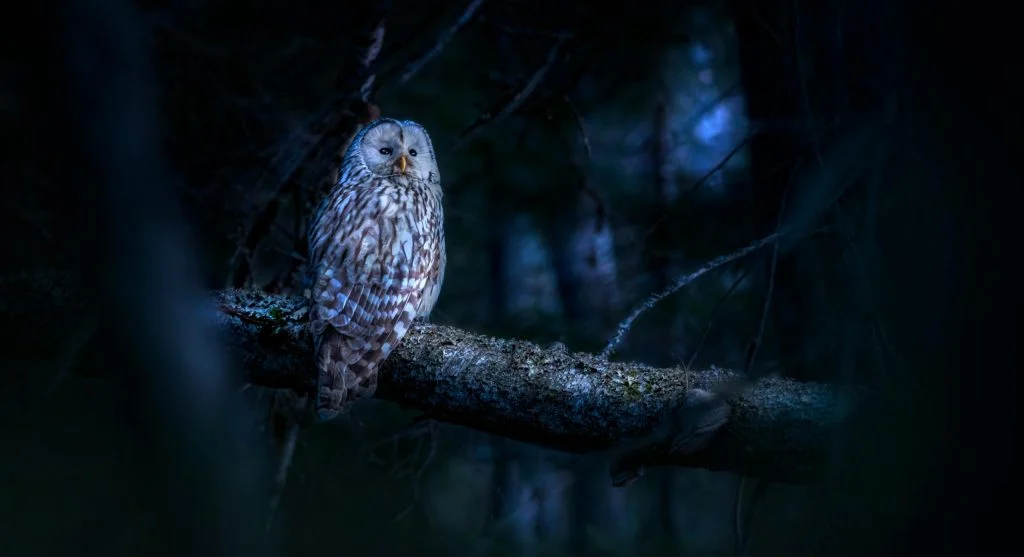
Owls are among the most recognizable nocturnal birds living in forests, grasslands, wetlands, deserts, and mountain ecosystems. These predators are known for silent flight, powerful senses, and remarkable nighttime hunting ability.
Wildlife researchers studying why owls are effective night hunters explain that specialized physical and behavioral adaptations help these birds survive in low-light environments. Their combination of hearing, vision, stealth, and flight control makes owls highly successful nighttime predators.
Large Eyes Improve Vision in Low Light
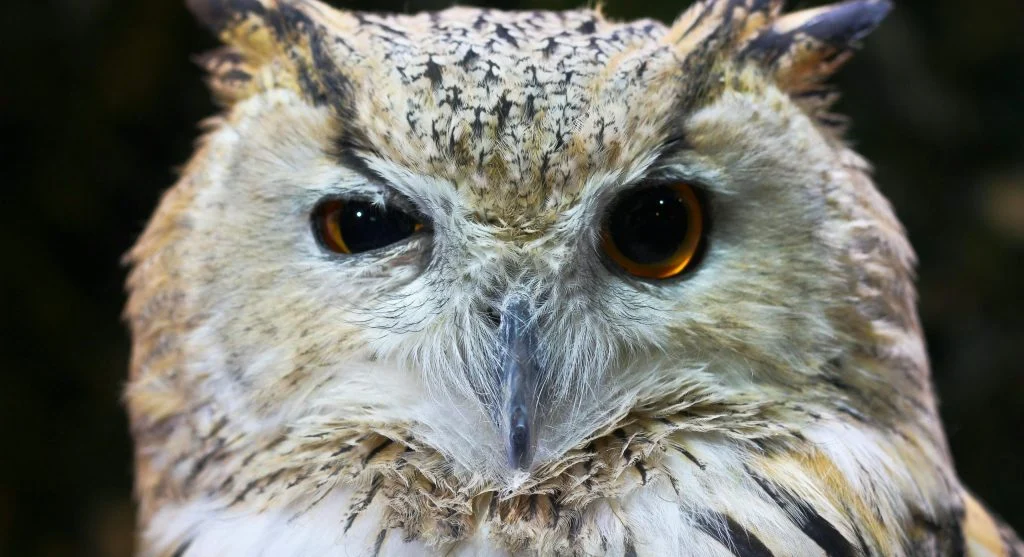
One major reason why owls are effective night hunters involves eyesight. Wildlife experts explain that owl eyes are highly adapted for gathering available light during nighttime conditions.
Large forward-facing eyes help improve depth perception and environmental awareness.
Although owls cannot see in complete darkness, their vision performs extremely well in dim light.
Credit: Vincent M.A. Janssen / Pexels
Excellent Hearing Helps Detect Hidden Prey
Another important owl hunting adaptation involves hearing. Wildlife researchers explain that many owls can detect tiny sounds produced by animals moving through grass, leaves, or snow.
Some owl species have asymmetrical ear placement that may improve sound direction detection.
Powerful hearing allows owls to locate prey even when visibility becomes limited.
Silent Flight Supports Stealth Hunting
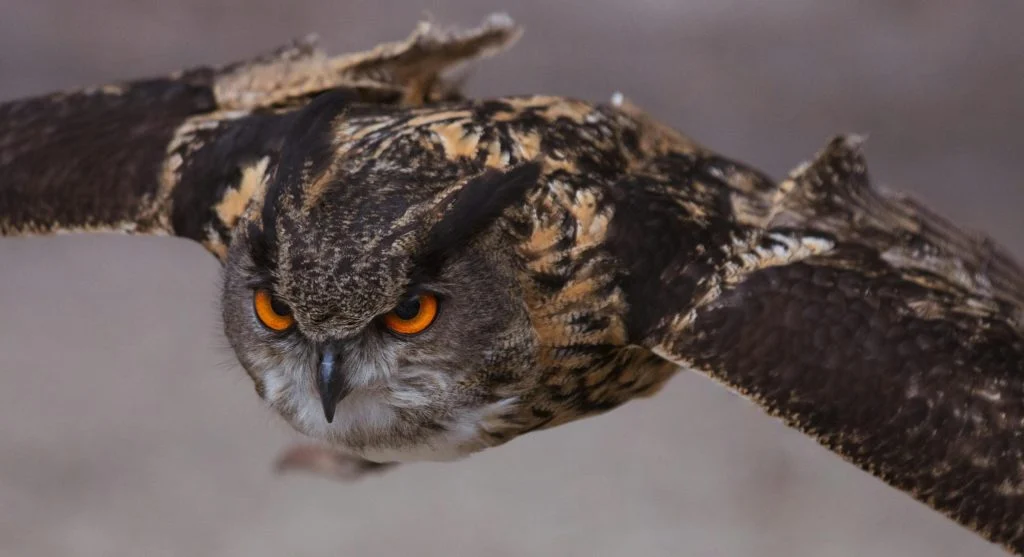
Owls possess specialized feather structures that help reduce flight noise. Wildlife experts explain that softer feather edges minimize sound while flying through the air.
Silent movement helps owls approach prey without creating strong disturbances.
This stealth adaptation remains especially useful during nighttime hunting conditions.
Strong Talons Help Capture Prey
Owls use sharp curved talons for grasping prey during hunting activity. Wildlife specialists explain that strong feet provide secure grip strength while capturing animals.
Different owl species may hunt rodents, insects, birds, fish, or small mammals depending on habitat and food availability.
Predator adaptations vary between species living in different ecosystems.
Credit: Vincent M.A. Janssen / Pexels
Owls Can Rotate Their Heads Significantly
Because owl eyes remain fixed within the skull, head movement becomes important for environmental scanning. Wildlife researchers explain that owls can rotate their heads much farther than humans.
This flexibility helps improve awareness while observing surroundings from perched locations.
Researchers continue studying owl anatomy and movement adaptations.
Many Owls Hunt During Quiet Night Conditions
Nighttime environments often contain fewer disturbances and cooler temperatures compared with daytime conditions. Wildlife experts explain that darkness may also provide advantages while approaching prey.
Nocturnal bird behavior helps reduce competition with some daytime predators.
Owls remain important predators within many ecosystems.
Habitat Protection Supports Owl Populations
Forests, wetlands, grasslands, and open countryside all provide important habitat for different owl species.
Wildlife conservation organizations continue supporting habitat protection and biodiversity monitoring involving bird populations.
Researchers studying why owls are effective night hunters emphasize the importance of protecting healthy ecosystems that support balanced food chains and wildlife diversity.
Credit: Karen F / Pexels
Frequently Asked Questions
Q: Why are owls good night hunters?
A: Owls use excellent hearing, low-light vision, silent flight, and strong talons for hunting.
Q: Can owls see in complete darkness?
A: No. Owls need some available light, but their vision works very well in dim conditions.
Q: Why is owl flight so quiet?
A: Specialized feather structures help reduce sound during flight.
Q: What do owls eat?
A: Owls may eat rodents, insects, birds, fish, and other small animals depending on species.
Q: Why are owls important for ecosystems?
A: Owls help maintain balanced predator-prey relationships within ecosystems.
Key Takeaway
Understanding why owls are effective night hunters reveals how specialized adaptations support survival in low-light environments. Sharp hearing, silent flight, excellent vision, and strong hunting abilities all contribute to owl success across forests, wetlands, and grasslands. Wildlife researchers and conservation organizations continue emphasizing the importance of protecting natural habitats that support owl populations and broader ecosystem biodiversity.